
Unwanted hair growth, explained clearly
Excess hair on the face or body affects 5 to 15% of women. Here you’ll find how hirsutism is diagnosed, which treatments have evidence behind them, and how other women deal with it day to day. The most common cause is PMOS, the hormonal condition that was called PCOS until 2026.

What the research says
of women have hirsutism, depending on the definition used.
of women referred for androgen excess had PMOS (then called PCOS) in a study of 950 patients.
body areas are scored from 0 to 4 in the modified Ferriman-Gallwey scale doctors use.
of women with unwanted facial hair had clinical levels of anxiety, and they spent 104 minutes a week managing it.
Find your topic
Living with hirsutism
Confidence, dating and other women’s stories.
Causes & diagnosis
Why it happens and how doctors assess it.
Treatment
Medication, supplements and hormone testing.
Hair removal
Shaving, plucking, laser and electrolysis compared.
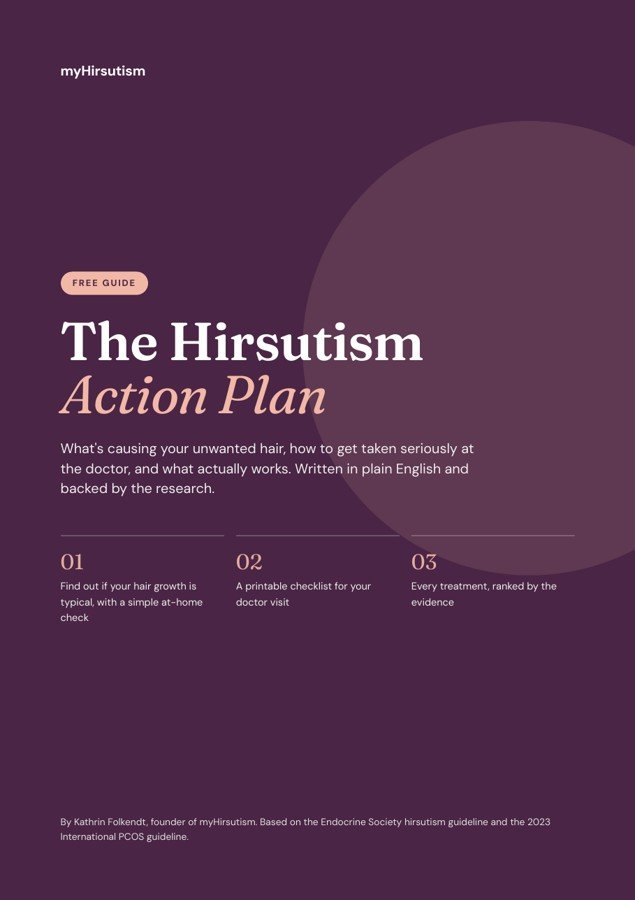
Free: The Hirsutism Action Plan
A 12-page guide: what’s causing your hair growth, which tests to ask your doctor for, and which treatments actually work, plus a printable doctor visit checklist.
You’ll also get our weekly email. Unsubscribe anytime.
Free tools
Practical answers in a couple of minutes. Nothing you enter is stored.

Why I run this site
I’m Kathrin Folkendt, and I live with PMOS, the condition that was called PCOS until 2026. Unwanted hair growth is one of its most common and distressing symptoms, yet in many years of covering women’s health at Femtech Insider, I’ve seen very few people address it. Most of what I found online was thin, outdated or trying to sell something. So this site sticks to what the research shows: every article links its sources, says how strong the evidence is, and tells you clearly when a popular remedy doesn’t hold up.
The information on this site is for education only and is not medical advice. Please talk to a doctor about diagnosis and treatment.