
Short answer: To hide stubble with makeup, start with a close, gentle shave, smooth the hairs flat with moisturizer, cancel the gray-blue shadow with a peach or orange color corrector, then press on thin layers of matte foundation and set it with powder. There are no studies on makeup for facial stubble specifically, but reviews suggest cosmetic camouflage can ease the emotional burden of visible skin concerns.
Facial stubble is one of the hardest parts of hirsutism to live with. In a study of 88 women with suspected PCOS (now PMOS) who had unwanted facial hair, participants spent an average of 104 minutes a week managing it, and 40% felt uncomfortable in social situations. [1] Makeup won’t make hair disappear, but the right technique can make stubble and the shadow of dark hairs under the skin much less visible.
This guide walks you through each step, explains why stubble shows through makeup, and covers what to try if makeup is not enough.
Why stubble shows through makeup
Two things make stubble hard to cover. The first is color. Dark hairs just under and at the surface of the skin create a gray, blue or green shadow that ordinary foundation can’t fully hide. The second is texture. When hair is shaved, the cut end is blunt rather than tapered, which makes regrowth feel and look coarser than it really is. [2] Foundation clings to these blunt tips and can catch around them, so layering on more product often makes the area look cakey rather than smooth.
Good stubble coverage deals with both problems by neutralizing the color and keeping the hairs flat.
Step 1: Shave close and gently
Makeup works best on freshly shaved skin. Shaving does not make hair grow back thicker or faster, so there is no medical reason to avoid it. [2], [3] The American Academy of Dermatology recommends wetting the skin first, using shaving cream or gel, shaving in the direction the hair grows, rinsing the blade after each stroke and replacing it after 5 to 7 shaves. [4]
If you have makeup plans in the evening, shave as late as you comfortably can so less stubble has grown back. If your skin gets red after shaving, let it calm down before you apply makeup. Avoid shaving over pimples or bumps. See our guide to shaving your face as a woman for a full routine.
Step 2: Prep the skin so the hairs lie flat
- Cleanse your face and pat it dry.
- Apply a light moisturizer and smooth it on in the direction the hair grows. Rubbing against the grain lifts the hairs.
- Wait a minute or two for it to absorb.
- If you use a primer, choose a smoothing or blurring one and press it into the stubble area rather than rubbing.
Step 3: Color correct the shadow
Evidence: Limited Color correcting uses opposite colors to cancel each other out. A peach or salmon corrector neutralizes a blue-gray shadow on light to medium skin, and an orange or red-orange corrector works better on deeper skin. This technique is common in drag and transgender makeup, where hiding beard shadow is a routine skill. We found no clinical studies testing color correctors on stubble, so this rating reflects practical experience rather than research.
- Use a creamy corrector, not a liquid one, so it stays put.
- Tap a thin layer only where the shadow shows, usually the upper lip, chin and jaw.
- Blend the edges with your fingertip or a damp sponge using a pressing motion.
- Less is more. If you can see orange after blending, you have used too much.
Step 4: Choose and apply foundation
A matte or satin foundation with medium to full coverage hides stubble better than a dewy one, because shine catches light on the hair tips. Look for a long-wearing or transfer-resistant formula if you need it to last all day. You don’t need an expensive brand. Finish, coverage and a good shade match matter more.
- Put a small amount of foundation on the back of your hand rather than straight on your face.
- Pick it up with a flat, dense brush or a damp makeup sponge.
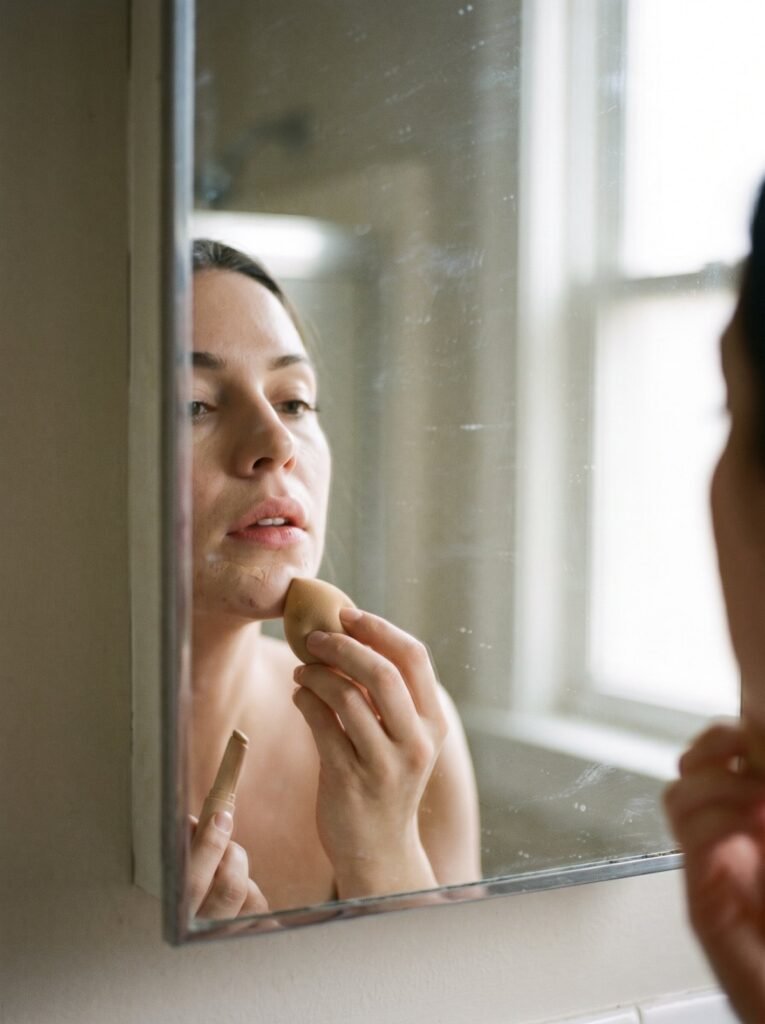
- Press and stipple the foundation onto the stubble area. Sweeping or buffing in circles lifts the hairs.
- Build coverage with two thin layers rather than one thick one. Let the first layer set for a minute before adding the second.
- If a few hairs still show, dab a little concealer that matches your skin on top and press it in.
Step 5: Set it so it lasts
Press a translucent or skin-tone setting powder over the stubble area with a puff or flat brush. Pressing keeps the hairs down, while swirling a fluffy brush around can lift them and disturb the foundation. A setting spray on top can help makeup last longer, especially in heat.
For touch-ups during the day, blot oil first with a tissue, then press on a little powder. Avoid adding more liquid foundation on top of worn makeup, which tends to look patchy over stubble.

Common mistakes that make stubble more visible
- Applying a thick layer of foundation, which settles around hair tips
- Rubbing or buffing against the direction of hair growth
- Shimmery or very dewy products on the upper lip and chin
- Skipping the color corrector on dark stubble and trying to cover the shadow with foundation alone
- Letting makeup stay on overnight, which can clog follicles that are already irritated from shaving
Can you bleach facial hair instead?
Evidence: Moderate Lightening dark hair can make it much easier to cover, or make makeup unnecessary on some days. The Endocrine Society guideline describes bleaching with hydrogen peroxide products as a way to mask unwanted facial hair, with possible side effects of irritation, itching and skin discoloration. [2] Bleaching creams can also temporarily lighten darker skin tones. [3] Always patch test first. Bleaching works best on hair that is fine and not too dense, because coarse, thick hair can still show as texture.
Do lemon juice, honey or tomato lighten facial hair?
Evidence: None We could not find any studies showing that lemon juice, honey or tomato lightens facial hair. Citrus juice also carries a real risk. Limes and other citrus fruits contain plant chemicals that react with sunlight on the skin and can cause a rash called phytophotodermatitis, with redness, blisters and dark patches. [5] Those dark marks can last for months, and sometimes years. [5], [6] If you want to lighten facial hair, a product made for facial bleaching and used as directed is the safer choice.
When makeup isn’t enough
Makeup is a short-term fix. If daily covering is wearing you down, longer-lasting options include:
- Eflornithine cream (Vaniqa): A prescription cream that slows facial hair growth. In two trials of 594 women, about 32% had marked improvement after 24 weeks, compared with 8% on a cream without the drug. [7]
- Laser or electrolysis: The Endocrine Society suggests laser for dark hair and electrolysis for white or blonde hair. [2] Read our guide to permanent hair removal.
- Treating the cause: For women with raised androgen levels, the guideline suggests medication to reduce regrowth alongside hair removal. [2] See hirsutism medication.
If stubble is mainly on your chin, our article on chin stubble as a woman has more targeted advice.
When to see a doctor
Hiding stubble is a cosmetic choice, but new or increasing facial hair can have a medical cause. See a doctor if your facial hair appeared suddenly or is getting worse quickly, if you notice signs of virilization such as a deeper voice or an enlarged clitoris, or if your periods are irregular or have stopped. A rapid onset of hair growth or virilization needs prompt testing. [2] One of the conditions a doctor will check for is PMOS, previously called polycystic ovary syndrome (PCOS), which was renamed in 2026. [8] Start with the hirsutism self-check and read about what causes hirsutism.
Frequently asked questions
Can you hide a beard shadow with makeup?
Yes, in most cases. A peach or orange color corrector under a matte foundation, applied in thin pressed layers and set with powder, covers most shadow. Very dense, dark stubble may still show texture, especially later in the day.
Should I shave before putting on makeup?
For the smoothest result, yes. Shaving does not make hair grow back thicker. [2] Give irritated skin time to settle first, and skip shaving over active pimples or bumps.
Does foundation make facial hair more noticeable?
It can if it is too thick, too dewy, or applied against the direction of hair growth. Thin, matte, pressed layers are less likely to cling to hairs.
Does makeup actually help with how you feel about facial hair?
There is no research on makeup for facial hair specifically. A review of cosmetic camouflage for visible facial skin conditions concluded it can give a meaningful emotional benefit, but called for more clinical studies. [9] If facial hair affects your mood, read what women with hirsutism want you to know.
Key takeaways
- Shave close and gently, then smooth moisturizer in the direction of hair growth.
- Use a peach or orange color corrector to cancel the gray-blue shadow before foundation.
- Press thin layers of matte foundation and powder instead of rubbing or buffing.
- Lemon juice and tomato have no evidence for lightening hair, and citrus with sun can cause dark patches.
- If daily covering is exhausting, ask a doctor about eflornithine, laser, electrolysis or treating the hormonal cause.

Free: The Hirsutism Action Plan
A 12-page guide: what’s causing your hair growth, which tests to ask your doctor for, and which treatments actually work, plus a printable doctor visit checklist.
You’ll also get our weekly email. Unsubscribe anytime.
Sources
- Lipton MG, Sherr L, Elford J, Rustin MHA, Clayton WJ. Women living with facial hair: the psychological and behavioral burden. J Psychosom Res. 2006;61(2):161-168. PubMed 16880018
- Martin KA, Anderson RR, Chang RJ, et al. Evaluation and Treatment of Hirsutism in Premenopausal Women: An Endocrine Society Clinical Practice Guideline. J Clin Endocrinol Metab. 2018;103(4):1233-1257. PubMed 29522147
- British Association of Dermatologists. Hirsutism (BAD Patient Hub). Accessed October 2026. Link
- American Academy of Dermatology. Hair removal: How to shave. Accessed October 2026. Link
- Cleveland Clinic. Phytophotodermatitis: Rash, Causes and Treatment. Accessed October 2026. Link
- DermNet. Phytophotodermatitis. Accessed October 2026. Link
- US National Library of Medicine, DailyMed. Vaniqa (eflornithine hydrochloride) cream, 13.9%. Prescribing information. Accessed October 2026. Link
- Teede HJ, Bahri Khomami M, Morman R, et al. Polyendocrine metabolic ovarian syndrome, the new name for polycystic ovary syndrome: a multistep global consensus process. Lancet. 2026;407(10545):2329-2339. PubMed 42119588
- Levy LL, Emer JJ. Emotional benefit of cosmetic camouflage in the treatment of facial skin conditions: personal experience and review. Clin Cosmet Investig Dermatol. 2012;5:173-182. PubMed 23152694
This article is for education and is not medical advice. Talk to a doctor about diagnosis and treatment.