
Short answer: Women with hirsutism want you to know that it is common, that it affects far more than their looks, and that managing it takes real time, money and emotional energy. Research backs this up: In one study, three quarters of women with facial hair had anxiety in the clinical range.[2] The good news is that support works. Talking therapies such as cognitive behavioral therapy (CBT) are recommended for anxiety and depression,[4][8] and small daily habits can help you build confidence.
From our survey: 97% of the 269 women with hirsutism we surveyed said their symptoms bother them, and 80% said it has affected their personal life. See the full results and their advice.
Hirsutism is coarse, dark hair growing in a male-like pattern, for example on the chin, chest or belly. It affects roughly 5% to 10% of women of reproductive age,[1] yet hardly anyone talks about it. In the first part of this article, Elizabeth, who lives with hirsutism, shares ten things she wants others to understand. After that, we look at what the research says about the emotional side, and at practical ways to build confidence and manage anxiety.
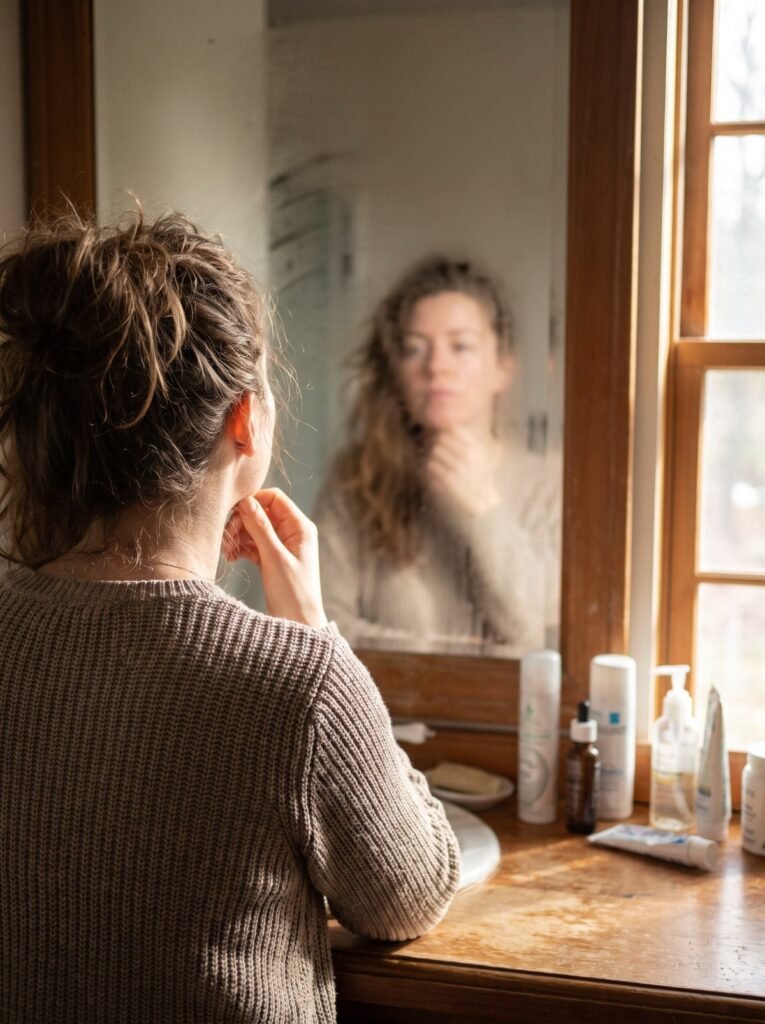
10 things women with hirsutism want you to know
Written by Elizabeth, in her own words, with notes from the myHirsutism team.
1. Hardly anyone knows about it
Hirsutism affects a lot of women, but almost nobody talks about it. So many of us feel like we are fighting it alone. Why is there so much shame around body hair?
Team note: Estimates suggest 5% to 10% of women of reproductive age have hirsutism.[1] That means you almost certainly know someone else who has it.
2. Being diagnosed was one of the best and worst days of my life
When my doctor said the word “hirsutism,” my heart stopped. But it was also a relief. Finally there was an explanation. It was a medical condition, and I wasn’t the only one. At the same time, I knew living with it would not be easy.
3. It affects every part of my life
I can’t go swimming or wear shorts on short notice. I have cancelled dates and plans because I didn’t have time to shave or wax. When my boyfriend touches my chin or kisses me, I worry he will feel the stubble. I get up before him to shave my face, and I feel anxious whenever I leave the house without a razor.
Team note: This is very common. In a UK study of 88 women with facial hair, 40% felt uncomfortable in social situations, and quality of life was lowest in the social and relationship areas.[2]
4. I shave my chin every day, sometimes twice
And there is still stubble. During conversations I wonder if people are looking at my chin. When someone gets too close, I step back.
Team note: In the same study, two thirds of women kept checking mirrors and three quarters kept checking their hair by touch.[2]
5. Leaving the house without foundation is not an option
I haven’t told my family, my boyfriend or my friends. It feels like a huge secret. Sometimes I wonder whether they already know and are just too polite to say anything.
6. I spend so much time and money managing my hair
I have tried shaving, waxing and IPL, which didn’t work for me. It is time-consuming, painful and expensive, like a part-time job. Sometimes I think I will never have smooth legs or feel comfortable in a swimsuit.
Team note: Women in the UK study spent an average of 104 minutes a week managing their facial hair alone.[2] If home methods aren’t working, medical treatment is an option. The Endocrine Society suggests a combined birth control pill as the first medication for most women who aren’t trying to get pregnant.[5] See our guides to hirsutism medication and permanent hair removal.
7. And it just doesn’t feel fair
Keeping up with it is exhausting. Some days, not feeling disgusting is a success. I ask myself “Why me?” and then feel guilty, because I know other people have it much worse. But body hair often feels like it controls my life.
8. Sometimes I wonder if I’ll be able to have kids
Many women with hirsutism also have PMOS (formerly PCOS), which can make it harder to get pregnant. I’m not sure I want children now, but I might later, and not knowing whether I can is scary.
Team note: PMOS, previously called polycystic ovary syndrome (PCOS), is the cause in 70% to 80% of women with hirsutism.[5] It was renamed in 2026 to reflect that it affects several hormone systems and metabolism.[6] PMOS can sometimes cause problems getting pregnant because the ovaries don’t release an egg every month, but fertility treatments are available.[7] If this worries you, ask your doctor. Not everyone with hirsutism has PMOS, so a diagnosis is the first step.
9. Hirsutism doesn’t make me less of a woman
The symptoms can be brutal, and they often make me feel less feminine. I know that isn’t true, but there is an inner voice that keeps coming back.
10. I just sometimes forget that
So I’ll say it again, for me and for you: Having hirsutism does not make you less of a woman.
How hirsutism affects mental health
Elizabeth’s feelings are backed by research. In the UK study mentioned above, 30% of women with facial hair had depression scores above the clinical cutoff and 75% had clinical levels of anxiety. The authors called psychological support “a neglected element of care.”[2]
A review of 30 studies found that women with PCOS (now PMOS) had roughly four times the odds of depressive symptoms and five to six times the odds of anxiety symptoms compared with women without it. Higher hirsutism scores were weakly linked to both, but did not fully explain the difference.[3] The International PCOS Guideline therefore recommends that doctors screen all adults with PMOS for depression and anxiety, and recognize the effect on body image.[4] The Endocrine Society defines hirsutism that needs treatment as unwanted hair of any amount that causes you enough distress to want help.[5] In other words, your feelings count, whatever your hair score.
How to build confidence and self-esteem with hirsutism
There are no studies testing confidence tips specifically in women with hirsutism, so the ideas below come from women in our community, including Kathrin, who started this site. Where there is broader evidence, we say so.
1. Be kind to yourself
Staring at your perceived flaws in the mirror feeds negative self-talk. Try to balance any goals for change with acceptance of where you are now. Kathrin reads a few positive affirmations every morning and finds it sets the tone for her day. We found no trials of affirmations in hirsutism, so treat this as something to try, not a proven fix.
2. Stop comparing yourself to others
Comparing your skin and body to other women’s, especially on social media, can leave you feeling defeated. Notice when scrolling makes you feel worse, and cut back. You can admire other women without measuring yourself against them.
3. Practice self-care
Self-care can be small: A bath, a walk, or an evening off from hair removal. It also includes everyday choices, such as eating regular meals and getting enough sleep, which the NHS lists as ways to cope with anxiety and stress.[9]
4. Connect with other women
Many women spend years believing they are the only one. Talking to others who understand can be a relief and a source of practical tips. Our list of hirsutism support groups and online communities and our collection of personal stories from women with hirsutism are good places to start.

Hirsutism and anxiety: How you can manage it
Many women with hirsutism feel nervous in social situations, on dates or at work, and worry that people are staring at their chin or arms. These approaches can help.
Recognize the anxiety and know your triggers
Admitting that you feel anxious is a first step. Then notice which situations, topics or people set it off, so you can prepare. The NHS suggests gradually spending more time in situations that make you anxious, rather than avoiding them.[9]
Talking therapy and CBT
Evidence: Strong CBT is a talking therapy that helps you notice and change unhelpful thoughts and behaviors. It usually takes 5 to 15 sessions and is a recommended treatment for anxiety and depression.[8] The International PCOS Guideline recommends offering psychological therapy such as CBT to women with PMOS who have depression or anxiety.[4] A simple CBT-style technique is to question an anxious thought: What exactly am I afraid of? What would a friend think? Is there something I can change to feel more at ease? In the UK, adults can refer themselves to NHS talking therapies without seeing a GP first.[9]
Yoga, breathing and exercise
Evidence: Moderate A review of eight small randomized trials with 319 participants found that yoga reduced anxiety in the short term in people with raised anxiety, but not clearly in people diagnosed with an anxiety disorder.[10] The NHS lists running, walking, swimming and yoga, as well as calming breathing exercises, as ways to reduce anxiety and stress.[9] Kathrin started yoga to lose weight and kept it up because it taught her to use her breath to stay calm in difficult moments.
Cut down on caffeine and alcohol
Evidence: Limited The NHS advises avoiding lots of coffee, tea, cola or energy drinks, because caffeine can disturb sleep and make anxiety harder to control. It also advises against using alcohol to cope, since it can make mental health worse.[9] We found no studies on this in women with hirsutism specifically.
What about niacin (vitamin B3)?
Evidence: None Niacin (vitamin B3) is sometimes suggested for anxiety. We found no good-quality human trials showing that niacin supplements treat anxiety, and the NIH fact sheet on niacin does not mention it as a treatment for any mental health condition. High doses can cause skin flushing and, with long-term use, liver damage.[11] Don’t take high-dose niacin without talking to a doctor.
When to seek mental health support
Talk to your doctor if:
- You feel low, hopeless or anxious most days and it isn’t getting better
- You avoid work, friends or dates because of your hair
- Hair checking or removal is taking over your day
- You are restricting food or have disordered eating, which the International PCOS Guideline says should be considered in women with PMOS of any weight[4]
If you are in crisis or thinking about harming yourself, get help now. In the US, call or text 988 to reach the 988 Suicide & Crisis Lifeline, which is free, confidential and available 24/7.[12] In the UK, you can call Samaritans on 116 123.[9]
See a doctor about the hair itself too, especially if it appears suddenly or worsens quickly, or comes with a deepening voice, an enlarged clitoris or irregular or missing periods, as these can point to a rare hormone-producing tumor.[5] Our hirsutism self-check is a good place to start.
Frequently asked questions
Can hirsutism cause anxiety and depression?
Hirsutism and PMOS (formerly PCOS) are consistently linked with anxiety and depression in studies.[2][3] These studies can’t prove cause and effect, but the link is clear enough that guidelines recommend screening.[4]
How can I feel more confident with hirsutism?
Being kind to yourself, cutting back on comparison, everyday self-care and connecting with other women can all help. If low self-esteem is hard to shift, talking therapy such as CBT is an evidence-based option.[4][8]
What is the best way to manage anxiety from hirsutism?
CBT is a recommended treatment for anxiety.[8] Exercise, yoga, breathing exercises and limiting caffeine and alcohol can also help.[9][10]
How can I support a friend or partner with hirsutism?
Listen without offering quick fixes, and don’t comment on their hair unless they bring it up. Read more in how to help a friend with hirsutism.
Key takeaways
- Hirsutism affects about 5% to 10% of women and has a real impact on daily life, relationships and mental health.
- Anxiety and depression are common, and guidelines recommend screening women with PMOS (formerly PCOS) for both.
- CBT is a recommended, evidence-based treatment for anxiety and depression.
- Self-kindness, less comparison and connecting with other women can help build confidence.
- If you are in crisis, call or text 988 in the US or call Samaritans on 116 123 in the UK.

Free: The Hirsutism Action Plan
A 12-page guide: what’s causing your hair growth, which tests to ask your doctor for, and which treatments actually work, plus a printable doctor visit checklist.
You’ll also get our weekly email. Unsubscribe anytime.
Sources
- van Zuuren EJ, Fedorowicz Z, Carter B, Pandis N. Interventions for hirsutism (excluding laser and photoepilation therapy alone). Cochrane Database Syst Rev. 2015, Issue 4 (CD010334). Plain language summary accessed October 2026. Link
- Lipton MG, Sherr L, Elford J, Rustin MH, Clayton WJ. Women living with facial hair: the psychological and behavioral burden. J Psychosom Res. 2006;61(2):161-168. PubMed 16880018
- Cooney LG, Lee I, Sammel MD, Dokras A. High prevalence of moderate and severe depressive and anxiety symptoms in polycystic ovary syndrome: a systematic review and meta-analysis. Hum Reprod. 2017;32(5):1075-1091. PubMed 28333286
- Teede HJ, Tay CT, Laven JJE, et al. Recommendations From the 2023 International Evidence-based Guideline for the Assessment and Management of Polycystic Ovary Syndrome. J Clin Endocrinol Metab. 2023;108(10):2447-2469. PubMed 37580314
- Martin KA, Anderson RR, Chang RJ, et al. Evaluation and Treatment of Hirsutism in Premenopausal Women: An Endocrine Society Clinical Practice Guideline. J Clin Endocrinol Metab. 2018;103(4):1233-1257. PubMed 29522147
- Teede HJ, et al. Polyendocrine metabolic ovarian syndrome, the new name for polycystic ovary syndrome: a multistep global consensus process. Lancet. 2026;407(10545):2329-2339. Published online May 12, 2026. PubMed 42119588
- NHS. Polyendocrine metabolic ovarian syndrome (PMOS), previously called polycystic ovary syndrome (PCOS). Accessed October 2026. Link
- NHS. Cognitive behavioural therapy (CBT): Overview. Accessed October 2026. Link
- NHS. Self-help for generalised anxiety disorder. Accessed October 2026. Link
- Cramer H, Lauche R, Anheyer D, et al. Yoga for anxiety: a systematic review and meta-analysis of randomized controlled trials. Depress Anxiety. 2018. doi:10.1002/da.22762. PubMed 29697885
- NIH Office of Dietary Supplements. Niacin: Fact Sheet for Consumers. Accessed October 2026. Link
- 988 Suicide & Crisis Lifeline. Accessed October 2026. Link
This article is for education and is not medical advice. Talk to a doctor about diagnosis and treatment.