

Short answer: Each hair that is treated disappears straight away, but some of those hairs come back, and new ones keep entering their growth phase. That is why electrolysis takes many sessions, usually weekly or every other week, for up to about a year and a half before an area is clear. Coarse hair, larger areas and hormone-driven hair growth take longer. There are no good studies giving an exact number of sessions, so be wary of anyone who promises one.
Planning electrolysis? Use our laser vs electrolysis calculator to estimate the hours, time and cost for your area.
Electrolysis is the hair removal method dermatologists describe as permanent, and it works on every hair color. [1] The catch is time. Because it treats one follicle at a time and has to catch each hair at the right stage, results build gradually. Here is what to expect, week by week and month by month, and what affects how long it takes.
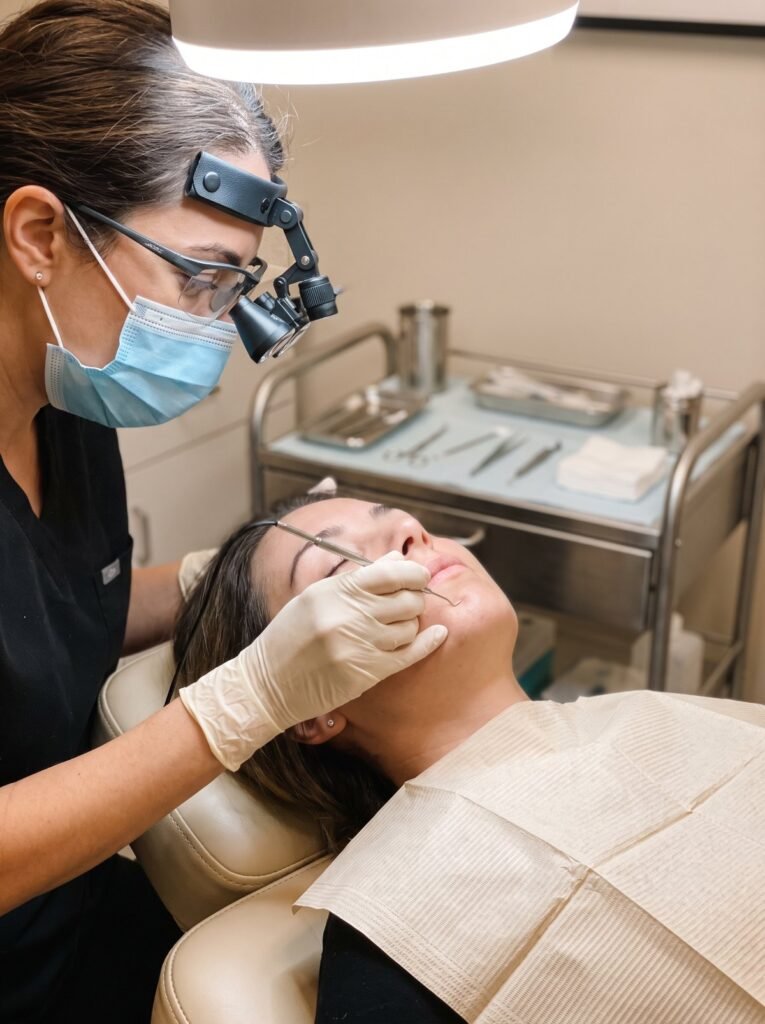
How electrolysis works
Evidence: Moderate A trained electrologist slides a very fine probe into the opening of a hair follicle and sends a small electric current down it to destroy the cells that grow the hair. [2] There are three methods: Galvanic, which uses a chemical reaction; thermolysis, which uses heat; and blend, which combines both. No clinical trials have compared them, so claims that one method is faster are based on anecdote. [3] The Endocrine Society suggests electrolysis for women with hirsutism who have white or blonde hair, which laser can’t treat. [4]
Why electrolysis takes many sessions
Three things make electrolysis slow:
- The hair growth cycle. Hairs in one area are in different phases at any time, and each visit targets the hairs that are at the right point in the cycle. [2] Hairs that are resting now will start growing later and need treating then.
- Not every follicle is destroyed the first time. DermNet notes a common estimate that about 25% of treated hair does not regrow, so many hairs need treating again. Results depend heavily on the electrologist’s skill, including how accurately the probe is placed and how the current is set. [3]
- One hair at a time. Galvanic electrolysis can take a minute or more per hair. [3]
How long does electrolysis take?
According to Cleveland Clinic, sessions last 15 minutes to an hour, appointments are usually weekly or every other week, and treatment can take up to a year and a half. The number of sessions depends on the body area, how coarse the hair is and how large the area is. [2]
You may see specific numbers online, such as “15 to 30 sessions.” We couldn’t find any study that supports a particular number, and individual needs vary widely. A small upper lip with fine hair will clear much faster than a chin with dense, coarse hair. Ask your electrologist for an estimate after a test session, and expect it to change as you go.
Electrolysis results timeline: What to expect
Right after a session
The treated hairs are gone immediately. [5] Mild redness around the treated follicles for a few days is common. [3] For the first 24 hours, avoid things that can irritate the follicles, such as heavy sweating, tanning, sun exposure and makeup. [2]
The first few weeks and months
Hairs will appear in the treated area again. Some are new hairs that were resting during your first session, and some are treated hairs that weren’t fully destroyed. [2][3] This can feel discouraging, but it is expected, and it is why regular appointments matter.
The end of treatment
Once all the follicles in an area have been destroyed, the hair does not grow back and no maintenance is needed. [1][2] In a 1986 report from one clinic, 93% of 281 women treated for facial and neck hirsutism improved, with no scarring. That study had no control group, so it shows what is possible in experienced hands rather than what everyone can expect. [6]
Electrolysis results with hirsutism or PMOS
If your hair growth is caused by hormones, for example in PMOS (formerly PCOS), androgens keep activating new follicles. Electrolysis can destroy the follicles that are treated, but new ones may start producing coarse hair. [4][7] In the 1986 clinic report, results were best when excess androgens were treated at the same time. [6] The Endocrine Society likewise suggests medication to minimize regrowth for women with raised androgen levels who choose hair removal. [4] Read more about hirsutism medication, or check whether your hair growth may be hirsutism with our hirsutism self-check.
How to get the best results from electrolysis
- Choose a skilled, qualified electrologist. Look for a licensed or certified electrologist, or a board-certified dermatologist, and check that needles and probes are sterile and disposable. [2][1]
- Keep appointments regular so hairs are caught as they enter the growth phase. [2]
- Ask your electrologist how to manage hair between sessions, for example whether to trim, shave or avoid plucking and waxing.
- Treat the cause if hormones are involved. [4]
- Use numbing cream if pain stops you from coming back. A topical anesthetic applied about an hour before can reduce discomfort. [3]

Side effects of electrolysis
Most people only have short-lived redness. Less common risks include scarring, lighter or darker marks on the skin, skin infection and flare-ups of cold sores. [3] People with darker skin can develop raised scars called keloids or temporary dark spots, which fade over time. [1][2] Unsterile probes can cause skin or blood infections. [1] Electrolysis should not be used if you have a pacemaker. [3] Home electrolysis kits don’t insert a probe into the follicle and are not a substitute. [1]
Electrolysis vs laser: Which is faster?
Laser is much faster. In a small study of 12 people who had laser under one arm and electrolysis under the other, laser removed about 74% of the hair at six months, compared with about 35% for electrolysis. Laser was also less painful and needed fewer sessions, but it was more expensive. [8] Laser only works well on dark hair, though, and its results are long-lasting rather than guaranteed to be permanent. [9][1] Many people use laser for larger areas of dark hair and electrolysis for light hairs or the few that remain. Compare all options in our guide to laser, IPL and electrolysis.
Is electrolysis worth it for legs or other large areas?
Because electrolysis treats one hair at a time, it is impractical for large areas. [5] Treating full legs would mean a very long course. If your leg hair is dark, laser is usually more practical. If you still get bumps from shaving in the meantime, see our guide to razor bumps and strawberry legs.
When to see a doctor
See a doctor before starting electrolysis if your unwanted hair appeared suddenly or is getting worse quickly, or if you also have irregular or missing periods, a deepening voice or an enlarged clitoris. These can be signs of a hormone problem that needs medical treatment. [4] Also see a doctor if a treated area becomes very painful, swollen or full of pus. [3]
Frequently asked questions
How many electrolysis sessions will I need?
It varies too much to give one number. Treatment usually involves weekly or every-other-week sessions for up to about 18 months, with coarse hair and larger areas needing more. [2]
Can you see electrolysis results after one session?
Yes, the treated hairs are gone right away. [5] But some will grow back and new hairs will appear, so it takes many sessions before you see lasting clearance. [3][2]
Does hair grow back after electrolysis?
Hair from follicles that have been fully destroyed doesn’t grow back. [2] Hairs that weren’t fully destroyed, and new hairs stimulated by hormones, can still appear, which is why treating the hormonal cause matters if you have hirsutism. [3][4]
Does electrolysis hurt?
It depends on your pain threshold. Most people feel a stinging or pinching sensation with each hair, and a numbing cream can help. [1][3]
Is electrolysis better than laser for facial hair?
For blonde, gray or white hairs, yes, because laser can’t treat them. [4] For women of Mediterranean or Middle Eastern descent with facial hirsutism, the Endocrine Society suggests electrolysis or topical treatment over laser, because of a higher risk of paradoxical hair growth with laser. [4]
Key takeaways
- Treated hairs disappear straight away, but lasting results take many sessions.
- Sessions are usually weekly or every other week, and a full course can take up to about 18 months.
- No study supports a specific number of sessions, so be wary of fixed promises.
- Hormone-driven hair growth, as in PMOS, responds best when the cause is treated too.
- Electrolysis is slower than laser but works on any hair color and is considered permanent.

Free: The Hirsutism Action Plan
A 12-page guide: what’s causing your hair growth, which tests to ask your doctor for, and which treatments actually work, plus a printable doctor visit checklist.
You’ll also get our weekly email. Unsubscribe anytime.
Sources
- American Academy of Dermatology. 6 ways to remove unwanted hair. Accessed October 2026. Link
- Cleveland Clinic. Electrolysis. Accessed October 2026. Link
- DermNet. Electrolysis. Accessed October 2026. Link
- Martin KA, Anderson RR, Chang RJ, et al. Evaluation and Treatment of Hirsutism in Premenopausal Women: An Endocrine Society Clinical Practice Guideline. J Clin Endocrinol Metab. 2018;103(4):1233-1257. PubMed 29522147
- Cleveland Clinic. Ingrown hair. Accessed October 2026. Link
- Richards RN, McKenzie MA, Meharg GE. Electroepilation (electrolysis) in hirsutism: 35,000 hours’ experience on the face and neck. J Am Acad Dermatol. 1986;15(4 Pt 1):693-697. doi:10.1016/S0190-9622(86)70225-9
- Teede HJ, et al. Polyendocrine metabolic ovarian syndrome, the new name for polycystic ovary syndrome: a multistep global consensus process. Lancet. 2026;407(10545):2329-2339. Published online May 12, 2026. PubMed 42119588
- Görgü M, Aslan G, Aköz T, Erdoğan B. Comparison of alexandrite laser and electrolysis for hair removal. Dermatol Surg. 2000;26(1):37-41. doi:10.1046/j.1524-4725.2000.99104.x
- American Academy of Dermatology. Laser hair removal: FAQs. Accessed October 2026. Link
This article is for education and is not medical advice. Talk to a doctor about diagnosis and treatment.