
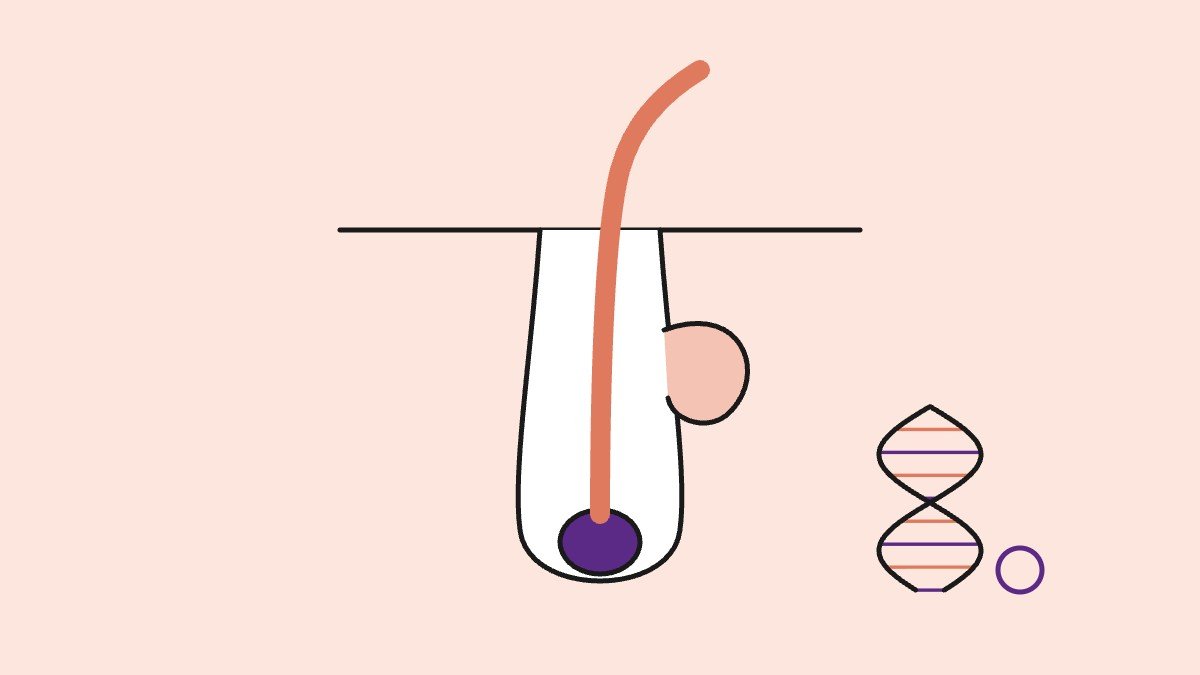
Short answer: You can’t switch off normal body hair, but you can slow down hair growth driven by hormones and remove the hair you have. If thick, dark hair on your stomach and chest is caused by hirsutism, birth control pills, sometimes combined with an anti-androgen, are the guideline-recommended treatment and take about 6 months to work. For the hair itself, laser hair removal gives long-lasting reduction on dark hair, and electrolysis is the only method that can remove hair permanently.
Fine, light hair on the chest and stomach is normal. Thick, dark hair in these areas is a different story. The NHS lists the chest and tummy among the typical areas affected by hirsutism, the male-pattern hair growth that affects about 1 in 10 women.[1][2] The best way to stop it depends on why it is growing.
This article covers how to slow new growth, how to get rid of hair on the stomach and chest, and whether you can stop body hair growth in general.
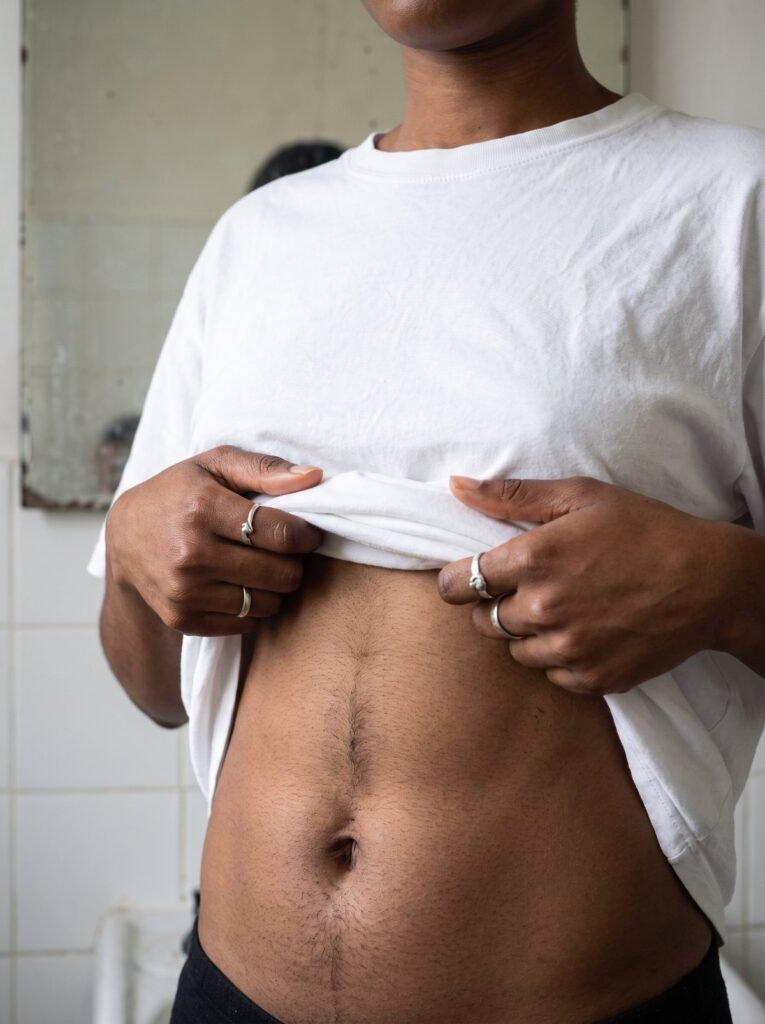
Can you stop hair growth on your stomach and chest?
It depends on the cause. There are two kinds of hair growth to think about:
- Hormone-driven hair (hirsutism). Androgens, hormones such as testosterone, turn fine hair into coarse, dark hair in sensitive areas, including the chest, upper abdomen and lower abdomen.[2] Treating the hormone side can slow new growth and make hairs finer.[3]
- Genetic or normal hair. If your hormones are normal, there is no medication approved to stop body hair. Hair removal is the main option. How much body hair counts as normal varies a lot between ethnic groups.[3]
Hirsutism is most often caused by PMOS, previously called polycystic ovary syndrome (PCOS). PCOS was renamed in 2026 after a global consensus published in The Lancet.[4] The Endocrine Society estimates that 70% to 80% of women with hirsutism have PMOS.[3] Other causes include idiopathic hirsutism (no cause found), inherited adrenal conditions, some medicines and, rarely, tumors.[3][1] Read more about what causes hirsutism, or check your score with our hirsutism self-check.
Your options at a glance
| Approach | What it does | Evidence |
|---|---|---|
| Birth control pill | Lowers androgen effects, slows new growth[3] | Strong |
| Anti-androgen (for example spironolactone) | Blocks androgens; added if the pill isn’t enough[3] | Strong |
| Laser or IPL | Long-term hair reduction on dark hair[5][3] | Strong |
| Electrolysis | Can permanently destroy follicles, any hair color[6] | Moderate |
| Shaving, waxing, creams | Removes hair temporarily[6] | Strong (for short-term removal) |
| Lifestyle changes | May lower testosterone; no proven effect on hair[3][2] | Limited |
How to slow hair growth caused by hormones
Birth control pills
Evidence: Strong The Endocrine Society suggests combined oral contraceptives (pills containing an estrogen and a progestin) as the first treatment for most women with hirsutism who are not trying to get pregnant. No single pill is preferred for most women.[3] The 2023 international PMOS guideline also recommends the pill for hirsutism in adults with PMOS.[7] The pill reduces new growth but does not remove existing hair, and the effect wears off if you stop.
Anti-androgens
Evidence: Strong If hair growth is still bothering you after 6 months on the pill, guidelines suggest adding an anti-androgen, a medicine that blocks the action of androgens, such as spironolactone.[3][7] Anti-androgens can harm the development of a male fetus, so they must be combined with reliable contraception if you could get pregnant.[3][7] The Endocrine Society advises against flutamide because of the risk of liver damage.[3]
Be patient: it takes 6 to 9 months
Hair grows in cycles, so any medicine takes about 6 months to show an effect and about 9 months to reach its full effect. The Endocrine Society recommends waiting at least 6 months before changing the dose or switching medicines.[3] Our guide to hirsutism medication covers each option in more detail.
What about eflornithine cream?
Evidence: Moderate Eflornithine cream (Vaniqa) slows hair growth but does not remove hair. It is used for unwanted facial hair in women, usually around the lips or under the chin, and hair returns to its previous state when you stop using it.[8] It is not licensed for the stomach or chest, and we couldn’t find studies of its use on large body areas.
Lifestyle changes
Evidence: Limited For women with hirsutism and obesity, the Endocrine Society recommends lifestyle changes because they can lead to weight loss and lower testosterone and insulin levels. It also says these changes should not be the main treatment for hirsutism.[3] An expert panel found no convincing data that lifestyle changes alone reduce hirsutism.[2] The NHS notes that losing weight, if you are overweight, can help control hormone levels.[1] For supplements and herbs, see our evidence review of supplements for hirsutism.
How to get rid of hair on your stomach and chest
Medical treatment slows new growth but does little for the hair you already have. That is why guidelines recommend combining it with hair removal.[3] The stomach is easy to reach, while the chest, especially around the nipples, needs more care.
Laser hair removal and IPL
Evidence: Strong Laser treatment and intense pulsed light (IPL) use light that is absorbed by the pigment in hair to damage the follicle. Most people need 2 to 6 treatments spaced 4 to 6 weeks apart, and many stay hair-free for months or even years.[5] The Endocrine Society suggests photoepilation (laser or light treatment) for brown, black or auburn hair, and long-wavelength lasers such as Nd:YAG or diode lasers for women with darker skin.[3] In randomized trials, long-term reduction was clearly shown with only one type of laser, so results can fade over time.[2] Women with PMOS may need more sessions than women with idiopathic hirsutism.[7] Home-use light devices have weaker evidence, mostly from short, uncontrolled studies.[9]
Electrolysis
Evidence: Moderate Electrolysis passes an electric current into each follicle. It can permanently remove hair of any color, including blonde and gray, but needs several sessions.[6][2] In inexperienced hands it can cause scarring and burns, and keloids (raised scars) in people with darker skin.[6] Because each hair is treated individually, it is slow and expensive for a large area like the stomach. The NHS points out that results vary, so longer-lasting methods may not be fully permanent for everyone.[1] Compare methods in our guide to permanent hair removal.
Shaving
Evidence: Strong Shaving is safe and quick on both the stomach and chest. It does not make hair grow back thicker or darker.[10][2] The downside is short-lived results and a risk of ingrown hairs.[6] Shave in the direction the hair grows, with a sharp blade and a shaving gel.[11]
Waxing and epilating
Evidence: Strong Waxing and plucking pull hair from the root, so results last longer than shaving. They are relatively safe and inexpensive but uncomfortable, and can rarely cause scarring or dark marks.[3] Skip waxing if you use isotretinoin or topical tretinoin, which thin the skin.[6]
Hair removal creams and bleaching
Evidence: Strong Depilatory creams dissolve hair at the surface. Always patch test, since they can irritate the skin.[6][12] Bleaching does not remove hair but makes it less visible.[3][12] Avoid using creams or bleach on the nipples or broken skin.
Hair on the chest and around the nipples
A few hairs around the nipples are common. If you remove them, trimming or careful tweezing is gentler than waxing on this thin skin. We cover this in more depth in why you might have hair on your breasts.

How to stop body hair growth in general
Many women ask whether there is a way to stop body hair growing everywhere. The honest answer: There is no treatment that permanently stops all body hair. What works depends on the area and the cause:
- If you have hirsutism, hormone treatment slows growth in androgen-sensitive areas such as the face, chest, stomach, back and thighs.[3][2]
- Laser and electrolysis reduce or remove hair area by area.[5][6]
- Fine, light hair on the arms or legs that is not linked to hormones usually does not respond to hormone treatment. For these areas, see how to make arm hair less noticeable.
Shaving, waxing and creams do not change how fast hair grows. They only remove it for a while.[6][10]
When to see a doctor
Talk to a doctor if the hair bothers you, especially if you also have irregular periods or acne.[1] Get an urgent appointment if you notice:[1][3]
- Sudden new growth of thick, dark hair on your body or face
- A deepening voice or larger muscles
- An enlarged clitoris
- Irregular or missing periods along with fast-growing hair
Rapid hair growth and these signs of virilization make an androgen-producing tumor more likely, although this is rare.[3]
Frequently asked questions
Is there a pill that stops body hair growth?
There is no pill that stops all body hair. If you have hirsutism, the combined birth control pill, sometimes with an anti-androgen, can slow hormone-driven hair growth over 6 to 9 months.[3]
Can hair growth on the stomach be stopped permanently?
Electrolysis can permanently remove individual hairs, and laser gives long-lasting reduction on dark hair.[6][5] If hormones are the cause, new hairs can still grow without ongoing treatment.
Does shaving my chest or stomach make the hair thicker?
No. Shaved hair can feel coarser because of its blunt tip, but shaving does not change thickness, color or growth speed.[10]
Why am I suddenly growing hair on my chest?
Gradual changes are often hormonal, for example with PMOS. Sudden growth, especially with a deeper voice or missing periods, should be checked by a doctor promptly.[1][3]
Key takeaways
- Thick, dark hair on the stomach and chest is often caused by hirsutism, most commonly due to PMOS.
- The pill, with an anti-androgen if needed, is the guideline treatment to slow new growth, and it takes about 6 months.
- Laser gives long-lasting reduction on dark hair. Electrolysis can be permanent for any hair color.
- No treatment stops all normal body hair. Shaving is safe and does not make hair thicker.

Free: The Hirsutism Action Plan
A 12-page guide: what’s causing your hair growth, which tests to ask your doctor for, and which treatments actually work, plus a printable doctor visit checklist.
You’ll also get our weekly email. Unsubscribe anytime.
Sources
- NHS. Excessive hair growth (hirsutism). Accessed October 2026. Link
- Escobar-Morreale HF, Carmina E, Dewailly D, et al. Epidemiology, diagnosis and management of hirsutism: a consensus statement by the Androgen Excess and Polycystic Ovary Syndrome Society. Hum Reprod Update. 2012;18(2):146-170. PubMed 22064667
- Martin KA, Anderson RR, Chang RJ, et al. Evaluation and Treatment of Hirsutism in Premenopausal Women: An Endocrine Society Clinical Practice Guideline. J Clin Endocrinol Metab. 2018;103(4):1233-1257. PubMed 29522147
- Teede HJ, Bahri Khomami M, Morman R, et al. Polyendocrine metabolic ovarian syndrome, the new name for polycystic ovary syndrome: a multistep global consensus process. Lancet. 2026;407(10545):2329-2339. PubMed 42119588
- American Academy of Dermatology. Laser hair removal: FAQs. Accessed October 2026. Link
- American Academy of Dermatology. 6 ways to remove unwanted hair. Accessed October 2026. Link
- Teede HJ, Tay CT, Laven JJE, et al. Recommendations From the 2023 International Evidence-based Guideline for the Assessment and Management of Polycystic Ovary Syndrome. J Clin Endocrinol Metab. 2023;108(10):2447-2469. PubMed 37580314
- MedlinePlus. Eflornithine. Accessed October 2026. Link
- Thaysen-Petersen D, Bjerring P, Dierickx C, Nash JF, Town G, Haedersdal M. A systematic review of light-based home-use devices for hair removal and considerations on human safety. J Eur Acad Dermatol Venereol. 2012;26(5):545-553. PubMed 22126235
- Mayo Clinic. Shaving hair: Does shaved hair grow back thicker? Accessed October 2026. Link
- American Academy of Dermatology. Hair removal: How to shave. Accessed October 2026. Link
- DermNet. Hirsutism. Accessed October 2026. Link
This article is for education and is not medical advice. Talk to a doctor about diagnosis and treatment.