
Short answer: The most common cause of excess testosterone in women is PMOS, the condition called polycystic ovary syndrome (PCOS) until 2026. It accounted for about 7 in 10 women with androgen excess in a large clinic study.[2], [4] Other causes include idiopathic hyperandrogenism (high androgens with no clear reason), non-classic congenital adrenal hyperplasia, medicines and steroids, and, rarely, hormone-producing tumors.[1], [2] The typical signs are excess hair in a male-type pattern, acne, scalp hair thinning and irregular periods.[1]
Testosterone is often called a “male” hormone, but women make it too, in smaller amounts. It belongs to a group of hormones called androgens. In women, the ovaries and adrenal glands are the main sources of androgens.[1] Problems start when levels rise too high or when hair follicles and skin react strongly to normal levels.
This article covers the signs of too much testosterone, what causes it, how it is tested and what treatments work. If you mainly want to know whether your hair growth counts as hirsutism, try the hirsutism self-check first.

What are the signs of too much testosterone in women?
Doctors call the visible signs of androgen excess “clinical hyperandrogenism.” The Endocrine Society hirsutism guideline lists these signs:[1]
Excess hair in a male-type pattern (hirsutism)
Coarse, dark hair on the upper lip, chin, chest, abdomen, back or inner thighs is the most common sign. Androgen excess is behind at least 80% of hirsutism.[1] Hirsutism affects roughly 5% to 15% of women, depending on how it is defined.[12] Doctors grade it with the Ferriman-Gallwey score.
Acne and oily skin
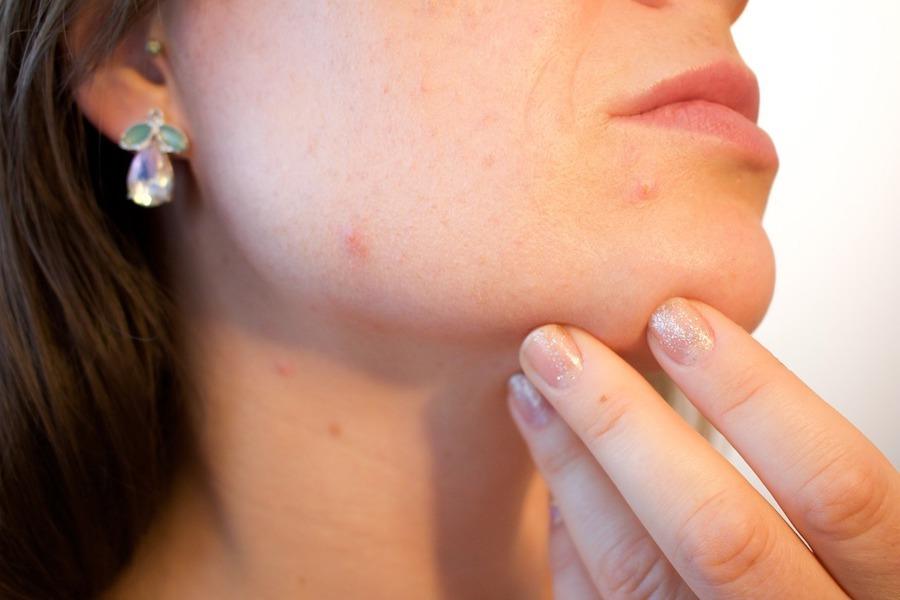
Androgens stimulate the oil glands in the skin, so persistent acne and oily skin (seborrhea) can be a sign.[1]
Thinning scalp hair
Some women notice female- or male-pattern hair loss, such as a widening part or thinning at the temples and crown.[1], [6]
Irregular or missing periods
Irregular cycles and fertility problems are common alongside androgen excess, especially in PMOS.[1], [3]
Rarer, more serious signs: Virilization
A deepening voice, an enlarged clitoris (clitoromegaly) and increasing muscle bulk are signs of virilization. They suggest much higher androgen levels and make an androgen-producing tumor more likely, so they need prompt medical attention.[1], [7] Read more in what is virilization?
What about mood, libido and weight?
Many websites list mood swings, low libido and weight gain as signs of high testosterone. We could not find good evidence that these are direct effects of testosterone in women. Weight and mood problems are common in PMOS, but the condition involves insulin and metabolism as well as androgens.[3], [4] If you have these symptoms, they are worth raising with your doctor, but they are not reliable signs of high testosterone on their own.
Can you have symptoms with normal testosterone?
Yes. Some women have hirsutism with normal androgen levels and regular periods. This is called idiopathic hirsutism and accounts for 5% to 20% of women with hirsutism. It is thought to reflect hair follicles that are more sensitive to normal amounts of androgen.[1]
What causes excess testosterone in females?
The best data come from a study of 950 women referred to two endocrine clinics in Palermo, Italy, with signs of androgen excess.[2] These figures come from specialist clinics, so they describe women who were referred, not everyone with high testosterone.
| Cause | Share of patients | What it is |
|---|---|---|
| PMOS (formerly PCOS) | 72.1% | A hormonal and metabolic condition. Excess androgens mostly come from the ovaries. |
| Idiopathic hyperandrogenism | 15.8% | High androgens with regular ovulation and no other cause found |
| Idiopathic hirsutism | 7.6% | Hirsutism with normal androgen levels |
| Non-classic congenital adrenal hyperplasia (NCAH) | 4.3% | An inherited enzyme problem that makes the adrenal glands overproduce androgens |
| Androgen-secreting tumors | 0.2% | Rare tumors of the ovary or adrenal gland |
PMOS (formerly PCOS)
PMOS affects about 10% to 13% of women.[3] It is diagnosed when at least two of these are present, after other causes are ruled out: Irregular or absent ovulation, signs of androgen excess, and polycystic ovaries on ultrasound or a high anti-Müllerian hormone (AMH) level.[3] In most women with PMOS, the extra androgens come from the ovaries.[1] In May 2026, PCOS was officially renamed polyendocrine metabolic ovarian syndrome (PMOS) after a global consensus process. The new name reflects that it affects several hormone systems and metabolism, not just the ovaries.[4] Read more in the difference between hirsutism and PCOS.
Idiopathic hyperandrogenism
Here, blood tests show high androgens, but periods and ovulation are regular and the ovaries look normal. In the Italian study, it was the second most common diagnosis.[2]
Non-classic congenital adrenal hyperplasia (NCAH)
NCAH is the milder form of an inherited condition, most often 21-hydroxylase deficiency, in which the adrenal glands make too many androgens. It is estimated to affect about 1 in 1,000 people, with rates varying between ethnic groups. Some people have no symptoms, while others develop hirsutism, scalp hair loss or irregular periods.[6] Doctors screen for it with a blood test for 17-hydroxyprogesterone.[3]
Medicines, supplements and steroids
Certain medicines and supplements can raise testosterone levels.[5] Examples with good documentation include:
- Anabolic steroids, which can cause facial and body hair growth, voice deepening and period changes in women[8]
- Testosterone gel used by a partner, which can transfer through skin contact[9]
- Valproic acid, an epilepsy and mood medicine, which the Endocrine Society names as the only anticonvulsant known to raise testosterone. The NHS lists PMOS as a rare side effect.[1], [10]
See the full list in drugs that can cause hirsutism.
Androgen-secreting tumors
Tumors of the ovary or adrenal gland are rare, but they are the cause doctors most want to catch. The key warning sign is hair growth or other symptoms that start suddenly or get worse quickly.[1], [3]
Other hormonal conditions
Cushing’s syndrome, an underactive thyroid, acromegaly (excess growth hormone) and high prolactin levels are uncommon causes. Doctors check for them when there are other symptoms that point that way.[1]
After menopause
New or worsening severe androgen excess after menopause should be checked for tumors and for ovarian hyperthecosis, a non-cancerous overgrowth of hormone-producing ovarian tissue.[3]
How is high testosterone in women tested?
The Endocrine Society suggests testing androgen levels in all women with an abnormal hirsutism score. Its recommendations for an accurate result include:[1]
- Total testosterone measured with an accurate method, ideally mass spectrometry. The international PCOS guideline also recommends this method over direct immunoassays.[1], [3]
- An early-morning blood draw, when levels are highest[1]
- If you have periods, testing on days 4 to 10 of your cycle[1]
- Free testosterone in some cases, calculated from total testosterone and sex hormone-binding globulin (SHBG), the protein that carries testosterone in the blood[1], [3]
To rule out other conditions, doctors commonly also check thyroid-stimulating hormone (TSH), prolactin, 17-hydroxyprogesterone and follicle-stimulating hormone (FSH).[3]
What is a normal level? MedlinePlus gives a range of 8.4 to 48.1 ng/dL (0.3 to 1.7 nmol/L) for women aged 17 to 50, and 2.9 to 40.1 ng/dL over 50. It also notes that ranges vary between labs, so always compare your result with your own lab’s range.[5] More in diagnosing hirsutism: Blood tests, ultrasound and other labs.
How do you treat high testosterone in women?
Treatment depends on the cause. A tumor is removed, a medicine may be changed, and CAH or Cushing’s is treated directly. For PMOS and idiopathic causes, treatment focuses on symptoms.
Combined oral contraceptive pills
Evidence: Strong For most women with hirsutism who are not trying to get pregnant, the Endocrine Society suggests the combined pill as the first treatment. One way it works is by raising SHBG, which lowers free testosterone. It takes about 6 months to see an effect on hair.[1]
Anti-androgen medicines
Evidence: Strong If hair growth is still bothersome after 6 months on the pill, the guideline suggests adding an anti-androgen such as spironolactone. These medicines can harm a developing baby, so the guideline recommends against using them alone unless you use reliable contraception.[1] See hirsutism medication.
Lifestyle changes
Evidence: Limited The international PCOS guideline recommends healthy lifestyle changes for all women with PMOS to improve metabolic health, with benefits even without weight loss. For women at a higher weight, weight management can bring significant clinical improvements.[3] Direct evidence that lifestyle change reduces hair growth is weaker, which is why we rate it as limited for hirsutism. For an honest look at diet and supplements, see natural remedies for hirsutism.
Hair removal
Evidence: Moderate Hair removal treats the hair you already have. The Endocrine Society suggests laser or light-based treatment for dark hair and electrolysis for white or blonde hair, though it rates the evidence as low quality.[1]
When to see a doctor
See a doctor if unwanted hair bothers you, especially with irregular periods.[7] Ask for an urgent appointment if:
- New thick, dark hair suddenly starts growing on your face or body[7]
- Your voice is getting deeper or your muscles are getting bigger[7]
- You notice an enlarged clitoris[1]
- Your periods become irregular or stop
- Symptoms appear or worsen after menopause
Frequently asked questions
What is the most common cause of high testosterone in women?
PMOS (formerly PCOS). It accounted for 72.1% of women referred to specialist clinics for androgen excess in the largest study.[2]
What are the first signs of high testosterone in a woman?
Usually new or increasing coarse hair on the face or body, persistent acne, thinning scalp hair or irregular periods. A deeper voice or an enlarged clitoris is rarer and needs prompt attention.[1]
What testosterone level is too high for a woman?
It depends on the lab and your age. MedlinePlus gives 8.4 to 48.1 ng/dL as a typical range for women aged 17 to 50.[5] Your symptoms and how quickly they developed matter as much as the number.[1], [3]
Can high testosterone in women be cured?
It depends on the cause. A tumor can be removed, and a drug cause can be changed. PMOS is considered a lifelong condition, but its symptoms can be managed.[3]
Can Cushing’s syndrome raise testosterone?
Cushing’s syndrome, caused by too much cortisol, can cause extra facial and body hair in women, but it is an uncommon cause of hirsutism.[1], [11]
Key takeaways
- PMOS (formerly PCOS) causes about 7 in 10 cases of androgen excess seen in specialist clinics.
- Typical signs are male-pattern hair growth, acne, scalp hair thinning and irregular periods.
- A deepening voice, an enlarged clitoris or fast-developing symptoms need urgent checks for rarer causes such as tumors.
- Testosterone is best measured in the morning with an accurate lab method, and normal ranges vary by lab.
- The combined pill is the usual first treatment for hirsutism, and anti-androgens need reliable contraception.

Free: The Hirsutism Action Plan
A 12-page guide: what’s causing your hair growth, which tests to ask your doctor for, and which treatments actually work, plus a printable doctor visit checklist.
You’ll also get our weekly email. Unsubscribe anytime.
Sources
- Martin KA, Anderson RR, Chang RJ, et al. Evaluation and Treatment of Hirsutism in Premenopausal Women: An Endocrine Society Clinical Practice Guideline. J Clin Endocrinol Metab. 2018;103(4):1233-1257. PubMed 29522147
- Carmina E, Rosato F, Jannì A, Rizzo M, Longo RA. Extensive clinical experience: relative prevalence of different androgen excess disorders in 950 women referred because of clinical hyperandrogenism. J Clin Endocrinol Metab. 2006;91(1):2-6. PubMed 16263820
- Teede HJ, Tay CT, Laven JJE, et al. Recommendations From the 2023 International Evidence-based Guideline for the Assessment and Management of Polycystic Ovary Syndrome. J Clin Endocrinol Metab. 2023;108(10):2447-2469. PubMed 37580314
- Teede HJ, et al. Polyendocrine metabolic ovarian syndrome, the new name for polycystic ovary syndrome: a multistep global consensus process. Lancet. 2026;407(10545):2329-2339. Published online May 12, 2026. PubMed 42119588
- MedlinePlus Medical Encyclopedia. Testosterone. Accessed October 2026. Link
- MedlinePlus Genetics. 21-hydroxylase deficiency. Accessed October 2026. Link
- NHS. Excessive hair growth (hirsutism). Accessed October 2026. Link
- MedlinePlus. Anabolic Steroids. Accessed October 2026. Link
- MedlinePlus Drug Information. Testosterone Topical. Accessed October 2026. Link
- NHS. Side effects of valproic acid. Accessed October 2026. Link
- National Institute of Diabetes and Digestive and Kidney Diseases (NIDDK). Cushing’s Syndrome. Accessed October 2026. Link
- Azziz R. The evaluation and management of hirsutism. Obstet Gynecol. 2003;101(5 Pt 1):995-1007. PubMed 12738163
This article is for education and is not medical advice. Talk to a doctor about diagnosis and treatment.