
Short answer: Yes, hirsutism and acne are linked. Both happen when androgens, hormones such as testosterone, act on the same skin structure: the hair follicle and its oil gland. That is why they often show up together, especially in PMOS (formerly PCOS). Some treatments, such as the combined pill and spironolactone, can help with both, and they have good evidence behind them.
From our survey: 58% of the 269 women with hirsutism we surveyed also have acne, and 86% of them treat it. See the full results.
If you are dealing with unwanted hair and breakouts at the same time, it can feel like your skin is working against you twice over. Understanding the shared cause makes it easier to find treatments that tackle both, and to know when acne is worth mentioning to a doctor as a possible sign of a hormone problem.
Why do hirsutism and acne happen together?
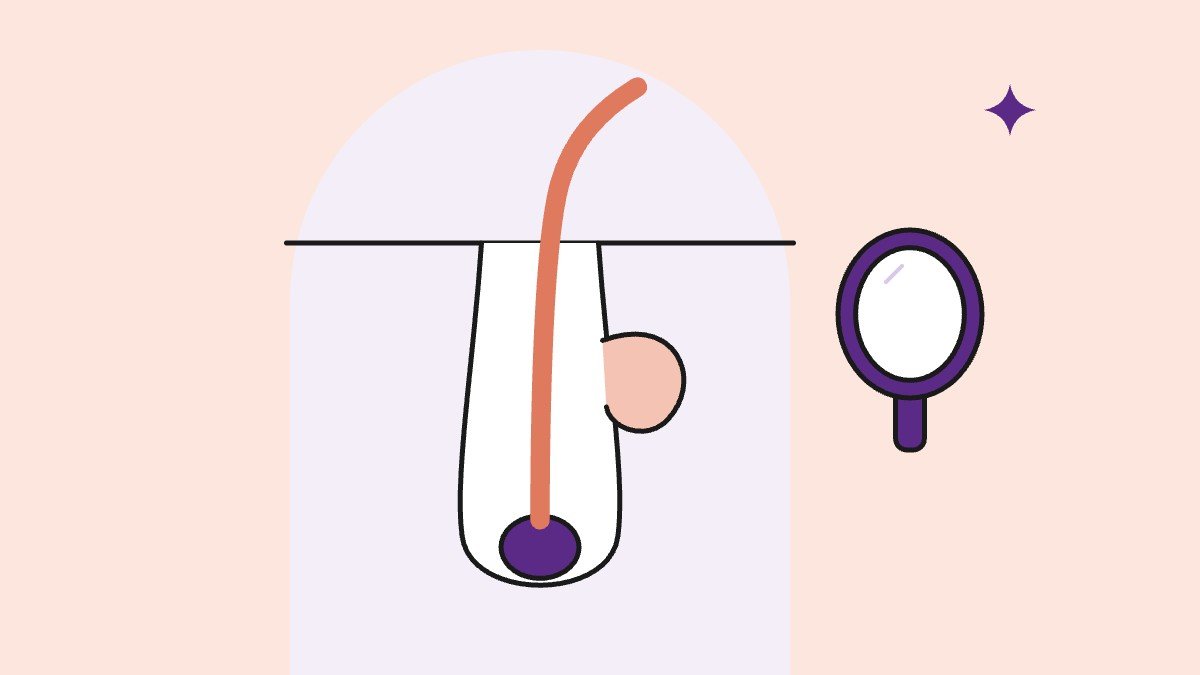
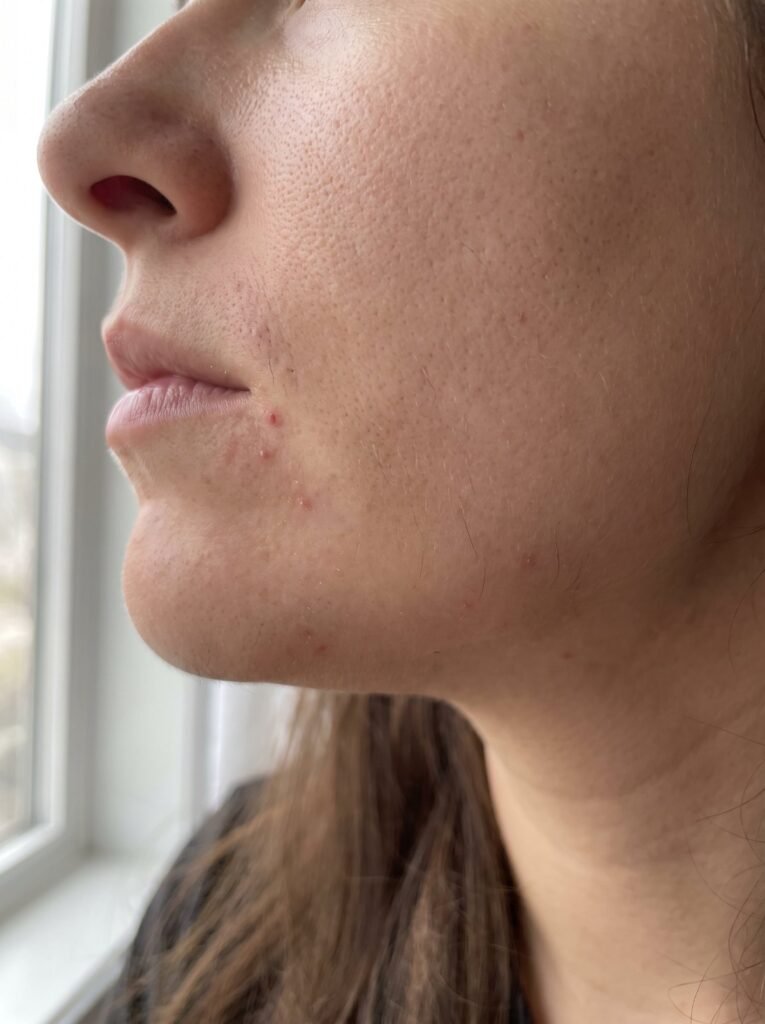
Each hair follicle in your skin is attached to a small oil gland. Doctors call this the pilosebaceous unit. Androgens act on this unit, and different follicles respond in different ways. In some, androgens turn fine, light hair into coarse, dark terminal hair, which causes hirsutism. In others, the response shows up as acne or oily skin (seborrhea).[1] DermNet lists both the body’s own androgens and androgens taken as medicine among the factors that drive acne.[2]
How much each person reacts varies a lot. The Endocrine Society guideline notes that hirsutism scores match blood androgen levels poorly, because follicles differ so much in how sensitive they are.[1] So you can have marked acne with mild hair growth, or the other way around.
Hormone shifts that can trigger breakouts
The NHS lists hormone changes during puberty, periods, pregnancy and menopause as common triggers for acne.[3] Certain medicines and greasy skin or hair products can also play a part.[3]
PMOS, acne and hirsutism
A common hormonal condition behind both symptoms is PMOS, previously called polycystic ovary syndrome (PCOS). It affects about 10% to 13% of women worldwide.[4] In May 2026, PCOS was renamed polyendocrine metabolic ovarian syndrome (PMOS) after a global consensus published in The Lancet.[5] The NHS now lists PMOS as one of the conditions that can cause acne.[3]
The International PCOS Guideline makes an important distinction. Hirsutism on its own is a good predictor of high androgen levels and PMOS in adults. Acne on its own is only a weak predictor.[4] In other words, plenty of women with acne have normal hormones. But acne together with excess hair, irregular periods or scalp thinning is a stronger reason to get checked.
Not sure whether your hair growth counts as hirsutism? Try our hirsutism self-check, or read about the difference between hirsutism and PMOS.
Should you get your hormones checked for acne?
For most women with acne, no. DermNet suggests hormone tests mainly when acne has unusual features.[2] The picture changes if you also have:
- Excess hair on the face, chest or stomach. The Endocrine Society recommends testing blood androgen levels in women with an abnormal hirsutism score.[1]
- Irregular or missing periods[4]
- Thinning hair on the scalp. Read more about hair loss in PMOS.
- Acne that is severe or does not respond to standard treatment[2]
Our guide to tests used to diagnose hirsutism explains what each blood test looks for.
Treatments that help both acne and hirsutism
The combined birth control pill
Evidence: Strong The Endocrine Society recommends the combined pill as the first-line medication for hirsutism in most women who are not trying to get pregnant, and it does not favor one brand or formulation over another.[1] The International PCOS Guideline agrees that the pill can be recommended for hirsutism and irregular periods.[4] For acne, the NHS lists the combined pill as a prescription option, and DermNet suggests a low-dose combined pill for mild acne in women.[2][3]
Hair responds slowly. Because facial hair grows in long cycles, hormone treatment takes about six months to show an effect and about nine months to reach its full effect.[1] The pill is not suitable for everyone, for example women at higher risk of blood clots, so your doctor will check your history first.[1]
Spironolactone
Evidence: Moderate Spironolactone is an anti-androgen, a drug that blocks the effects of androgens. The best evidence for acne comes from the SAFA trial, a well-run randomized trial of 410 women in England and Wales, funded by the UK’s National Institute for Health and Care Research. After 24 weeks, 82% of women taking spironolactone said their acne had improved, compared with 63% on a placebo. Side effects were more common with spironolactone, especially headaches (20% vs 12%), but most were mild.[6]
For hirsutism, guidelines suggest adding an anti-androgen if hair growth is still a problem after six months on the pill.[1][4] Anti-androgens can harm the development of a male baby, so they should never be taken during pregnancy and must be combined with reliable contraception.[1][4][7]
For more detail on both options, see our guide to hirsutism medication.
Healthy lifestyle habits
Evidence: Limited The International PCOS Guideline recommends healthy lifestyle habits for all women with PMOS, mainly to improve metabolic health. Benefits occur even without weight loss.[4] The Endocrine Society notes that lifestyle changes can help hirsutism in women with obesity, but the effect is modest.[1] We found no good evidence that a specific diet clears hormonal acne.
Treatments for acne alone
Evidence: Strong Standard acne treatments work whether or not your acne is hormonal. The NHS and DermNet list:[2][3]
- Topical retinoids such as tretinoin or adapalene, which reduce oiliness and help prevent spots
- Benzoyl peroxide, salicylic acid or azelaic acid, some of which you can buy without a prescription
- Topical or oral antibiotics, which need a prescription
- Clascoterone, a newer topical anti-androgen cream
- Isotretinoin, a strong oral retinoid for severe acne, prescribed by a dermatologist
Day-to-day care also matters. The NHS suggests washing twice a day with a gentle cleanser, choosing non-comedogenic (non-pore-clogging) skincare and makeup, and avoiding picking, squeezing or scrubbing, which can cause scars and irritation.[3]
Hair removal when you have acne
Hair removal and acne can clash. Shaving over active spots can nick them, and waxing or epilating inflamed skin can make it sorer. Hair removal creams can cause skin reactions in some people.[7] A few practical tips:
- Use a fresh, sharp blade and shave in the direction of hair growth around active spots.
- Avoid waxing over inflamed or broken skin.
- Patch-test any hair removal cream on a small area first.
- If you get bumps after hair removal, they may be ingrown hairs rather than acne. See our guide to razor bumps and ingrown hairs.
For longer-lasting results, laser or electrolysis may be options. Read our guide to permanent hair removal.
When to see a doctor
See a doctor if over-the-counter acne treatments are not helping, if spots are deep, painful or scarring, or if acne is affecting your mental health.[3] See a doctor soon if you notice:
- Acne or hair growth that starts suddenly or gets worse quickly
- A deepening voice, an enlarged clitoris or increased muscle mass, which can be signs of virilization
- Irregular or missing periods
- Thinning hair on your scalp alongside new facial or body hair
Frequently asked questions
Is hormonal acne a sign of PCOS?
It can be, but acne on its own is a weak predictor of high androgen levels. Acne combined with excess hair or irregular periods is a stronger reason to be checked for PMOS (formerly PCOS).[4]
Can the birth control pill help acne and facial hair at the same time?
Yes. The combined pill is a standard option for both, but expect to wait about six months to see a difference in hair growth.[1][3]
Does spironolactone work for acne?
A large randomized trial found it improved acne more than a placebo, with the clearest difference after 24 weeks. It must not be taken during pregnancy.[6][7]
Why do I break out before my period?
Hormone changes around your period are a common acne trigger.[3]
Key takeaways
- Acne and hirsutism share a cause: androgens acting on the hair follicle and its oil gland.
- PMOS (formerly PCOS) is a common hormonal condition behind both.
- Acne alone rarely means a hormone problem, but acne plus excess hair or irregular periods is worth checking.
- The combined pill and spironolactone can help both, but hair takes about six months to respond.
- Anti-androgens must never be used in pregnancy and need reliable contraception.

Free: The Hirsutism Action Plan
A 12-page guide: what’s causing your hair growth, which tests to ask your doctor for, and which treatments actually work, plus a printable doctor visit checklist.
You’ll also get our weekly email. Unsubscribe anytime.
Sources
- Martin KA, Anderson RR, Chang RJ, et al. Evaluation and Treatment of Hirsutism in Premenopausal Women: An Endocrine Society Clinical Practice Guideline. J Clin Endocrinol Metab. 2018;103(4):1233-1257. PubMed 29522147
- DermNet. Acne. Accessed October 2026. Link
- NHS. Acne. Accessed October 2026. Link
- Teede HJ, Tay CT, Laven JJE, et al. Recommendations from the 2023 International Evidence-based Guideline for the Assessment and Management of Polycystic Ovary Syndrome. J Clin Endocrinol Metab. 2023;108(10):2447-2469. PubMed 37580314
- Teede HJ, et al. Polyendocrine metabolic ovarian syndrome, the new name for polycystic ovary syndrome: a multistep global consensus process. Lancet. 2026;407(10545):2329-2339. Published online May 12, 2026. PubMed 42119588
- Santer M, Lawrence M, Renz S, et al. Effectiveness of spironolactone for women with acne vulgaris (SAFA) in England and Wales: pragmatic, multicentre, phase 3, double blind, randomised controlled trial. BMJ. 2023;381:e074349. PubMed 37192767
- Pediatric Endocrine Society. Polycystic ovary syndrome. Accessed October 2026. Link
This article is for education and is not medical advice. Talk to a doctor about diagnosis and treatment.