
Short answer: There is no number of waxing sessions after which hair reliably stops growing. Waxing pulls hair out from the root, but the follicle that makes the hair usually survives, so the hair grows back, typically within a few weeks. Repeated waxing may reduce hair in some people, but the long-term effects have not been studied, and no research shows that waxing stops hair growth. If you want hair gone for good, electrolysis and laser are the options with evidence.
Many people who wax for years notice that their hair seems sparser or finer, and salons sometimes promise that hair will “eventually stop.” It is an understandable hope, especially if you have been waxing since your teens. Here is what we know about waxing and regrowth, why hair keeps coming back, and what works if you want it gone permanently.
How waxing works
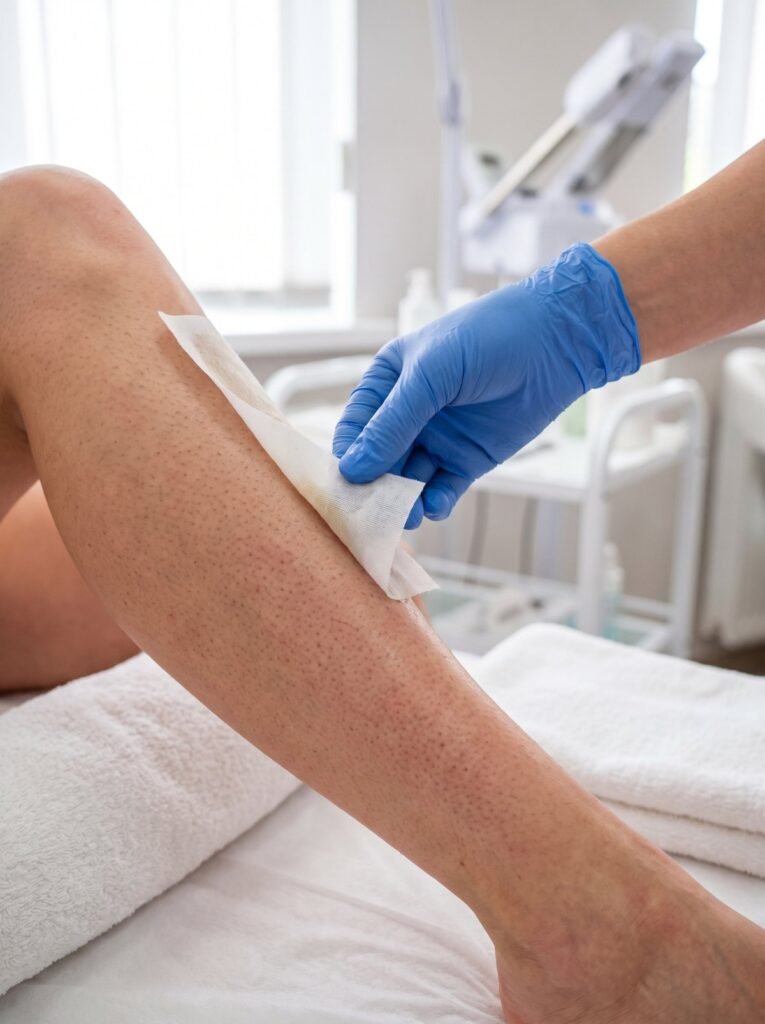
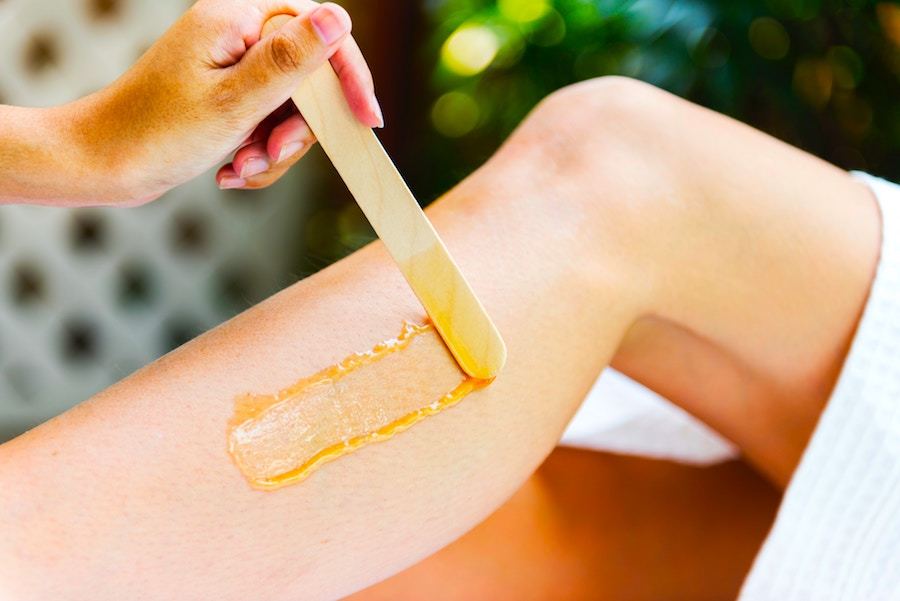
Waxing is a form of epilation, which means the hair is removed from below the skin surface rather than cut at it. Warm wax is applied, covered with a cloth or paper strip and pulled off against the direction of hair growth. Warm waxing works better than cold waxing and is usually done in a salon. [1] Because the whole hair is pulled out, regrowth takes longer than after shaving: DermNet says about 2 to 3 weeks, and the AAD says a few weeks or longer. [1][2]
Shaving, waxing and plucking remove the hair, but not the follicle that produces it. [3] As long as the follicle can still make hair, a new hair will grow in its place.
How many times do I have to wax before the hair stops growing?
Evidence: None Nobody knows, and for most people the honest answer is that it won’t fully stop. DermNet, a dermatology reference site, says the long-term effects of repeated waxing are unknown. It adds that repeated damage to hair follicles may result in a permanent reduction of unwanted hair. [1] That is a possibility, not a promise, and we couldn’t find any studies that measured how many hairs stop growing after months or years of waxing.
Dermatology sources consistently classify waxing as temporary hair removal, and electrolysis as the method that permanently destroys follicles. [4][2]
Why hair may seem thinner after years of waxing
If your hair seems sparser after years of waxing, there may be other explanations besides waxing itself. Hair growth rate and density decrease with age. [5] Read more in does leg hair stop growing at a certain age.
Does waxing make hair grow back thicker?
We found no evidence that it does. A related myth is that shaving makes hair thicker, but the Endocrine Society notes that shaving does not change the hair’s growth phase or its thickness. [6]
Why waxing won’t stop hirsutism
If you have coarse, dark hair on your chin, chest, stomach or back, it may be hirsutism, which is driven by androgens (hormones such as testosterone). The most common cause is PMOS, previously called polycystic ovary syndrome (PCOS). [6][7] As long as the hormones keep stimulating follicles, waxing will only ever be a short-term fix.
The Endocrine Society describes plucking and waxing as relatively safe and inexpensive but uncomfortable, and notes that they can cause scarring, folliculitis (inflamed follicles) and dark marks, particularly in women of color. [6] Its guideline suggests medication, such as the pill, as the first treatment for most women with hirsutism, with hair removal added if needed. [6][8] Check your hair growth with our hirsutism self-check and read about hirsutism medication.
Pros and cons of waxing
| Pros | Cons |
|---|---|
| Results last longer than shaving, usually a few weeks [2] | Painful, and skin stays red and sensitive for a few hours [1] |
| Works on large and small areas, including legs, bikini line, upper lip and eyebrows [1] | Can cause folliculitis, ingrown hairs, scarring and dark marks [1] |
| One of the most effective methods of temporary hair removal [1] | Wax that is too hot can burn the skin [2] |
| Can be done at home with pharmacy kits [1] | Rosin in some waxes can cause an allergic rash [1] |
| Hair has to grow long enough for the wax to grip before the next session |
How to wax safely
- Don’t wax if you are taking isotretinoin, or within 6 months of stopping it, or while using an antibiotic or a tretinoin cream. These can thin the skin so that it tears when the wax is pulled off. [2] DermNet advises waiting 6 months to a year after oral retinoids and stopping topical retinoids 3 to 4 weeks before waxing. [1]
- Don’t wax irritated, sunburned or broken skin. [1]
- Check the temperature. Wax should be warm, not hot. [1][2]
- At a salon, watch for double-dipping. The esthetician should use a fresh wooden stick each time. Heated wax doesn’t get hot enough to kill germs, so reused sticks can spread bacteria. [2]
- Press after pulling. Pressing your hand on the area right after the strip comes off may reduce the sting. [1]
- Consider sugaring if wax irritates your skin. Sugaring uses a paste of sugar, lemon juice and water and is an alternative for people sensitive to wax. [4]
- Take a break if you get bumps. If waxing causes folliculitis, the AAD recommends stopping for 30 days. [9]
Bumps and dark dots after waxing are often ingrown hairs or folliculitis. See our guide to razor bumps, ingrown hairs and strawberry legs for prevention and treatment.
What works if you want hair to stop growing for good?
Evidence: Moderate Electrolysis destroys each follicle with a fine probe and an electric current. It is considered permanent once treatment is complete and works on any hair color, but it is slow and best for smaller areas. [2][10] See how long electrolysis takes to show results.
Evidence: Strong Laser hair removal gives long-lasting reduction rather than guaranteed permanent removal. Most people need 2 to 6 treatments and may need maintenance sessions. It works best on dark hair. [11] Clinical guidelines suggest laser or other light-based treatment for women with hirsutism who have auburn, brown or black hair. [6] Don’t wax or pluck between laser sessions, because laser needs the hair root in place. [12]
Compare all options in our guide to laser, IPL and electrolysis. If you are wondering about tweezers instead, see how many times you have to pluck a hair before it stops growing.
When to see a doctor
See a doctor if your unwanted hair appeared suddenly or is getting worse within months, or if it comes with irregular or missing periods, a deepening voice, an enlarged clitoris or increased muscle mass. These can be signs of a hormone problem that needs treatment. [6] Also see a doctor if bumps after waxing are very painful, spreading or full of pus, or you have a fever. [13]
Frequently asked questions
Does waxing reduce hair growth over time?
It might in some people, but this has not been studied properly. DermNet says the long-term effects of repeated waxing are unknown, and that repeated damage to follicles may permanently reduce hair. [1]
How long does waxing last?
Hair usually takes about 2 to 3 weeks to grow back after waxing, though some people go longer. [1][2]
Does waxing make hair grow back thicker?
We found no evidence that it does. Shaving doesn’t change hair thickness either, according to the Endocrine Society. [6]
Can waxing cause ingrown hairs?
Yes. Ingrown hairs and folliculitis are known side effects of waxing, along with scarring and dark marks. [1]
Does waxing work for PCOS (PMOS) hair?
It removes the hair temporarily, but it won’t stop hormone-driven hair from growing back. Medication, together with laser or electrolysis if you want, addresses the cause and gives longer-lasting results. [6]
Key takeaways
- Waxing removes hair from the root, but the follicle usually survives, so hair grows back within a few weeks.
- No studies show that any number of waxing sessions stops hair growth. Any long-term reduction is uncertain.
- Hair that seems thinner after years of waxing may also reflect age or hormonal changes.
- Don’t wax while using retinoids or isotretinoin, or on irritated or broken skin.
- For lasting results, electrolysis is considered permanent, and laser gives long-lasting reduction for dark hair.

Free: The Hirsutism Action Plan
A 12-page guide: what’s causing your hair growth, which tests to ask your doctor for, and which treatments actually work, plus a printable doctor visit checklist.
You’ll also get our weekly email. Unsubscribe anytime.
Sources
- DermNet. Waxing. Accessed October 2026. Link
- American Academy of Dermatology. 6 ways to remove unwanted hair. Accessed October 2026. Link
- Cleveland Clinic. Ingrown hair. Accessed October 2026. Link
- DermNet. Epilation. Accessed October 2026. Link
- Cleveland Clinic. Body hair. Accessed October 2026. Link
- Martin KA, Anderson RR, Chang RJ, et al. Evaluation and Treatment of Hirsutism in Premenopausal Women: An Endocrine Society Clinical Practice Guideline. J Clin Endocrinol Metab. 2018;103(4):1233-1257. PubMed 29522147
- Teede HJ, et al. Polyendocrine metabolic ovarian syndrome, the new name for polycystic ovary syndrome: a multistep global consensus process. Lancet. 2026;407(10545):2329-2339. Published online May 12, 2026. PubMed 42119588
- Endocrine Society. Experts issue recommendations to manage unwanted hair growth in women (2018). Accessed October 2026. Link
- American Academy of Dermatology. Acne-like breakouts could be folliculitis. Accessed October 2026. Link
- Cleveland Clinic. Electrolysis. Accessed October 2026. Link
- American Academy of Dermatology. Laser hair removal: FAQs. Accessed October 2026. Link
- Cleveland Clinic. Laser hair removal. Accessed October 2026. Link
- Cleveland Clinic. Folliculitis. Accessed October 2026. Link
This article is for education and is not medical advice. Talk to a doctor about diagnosis and treatment.