
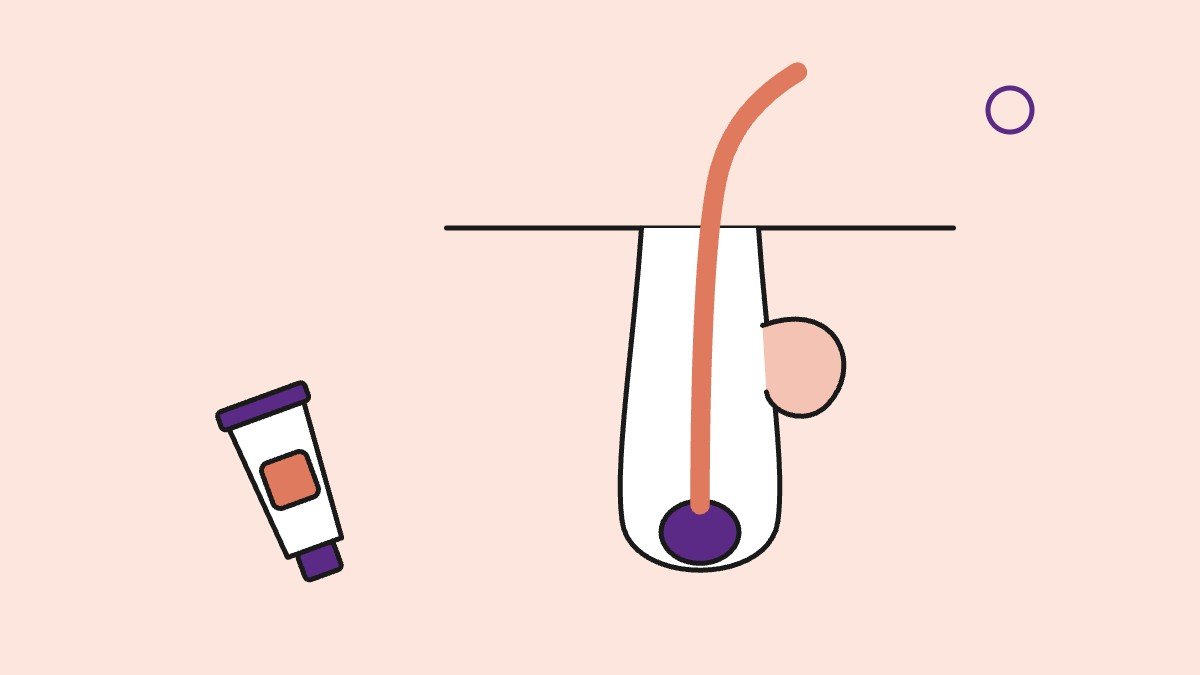
Short answer: For back hair, laser hair removal is the most practical long-term option if your hair is dark, because it treats large areas quickly and reduces hair for months or years. At home, a long-handled razor, hair removal cream or a helper with wax all work for a while. Thick, dark hair on the upper or lower back is a common sign of hirsutism, so if you also have irregular periods or acne, see a doctor, because treating the cause slows regrowth.
From our survey: 14% of the 269 women with hirsutism we surveyed remove hair from their back, most often by shaving or waxing. See the full results.
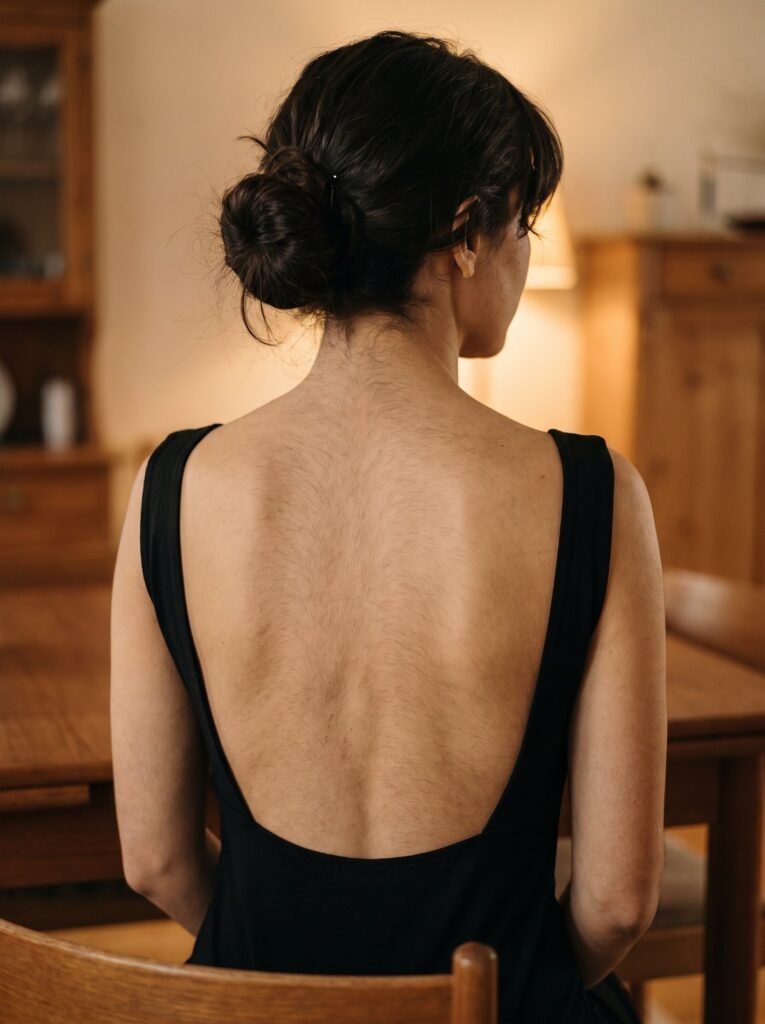
Every woman has some fine, light hair on her back. When it is coarse, dark and long, it can feel embarrassing, especially in a swimsuit or backless top. The back is also the hardest place to reach, which makes removing the hair yourself frustrating.
This guide covers why women grow back hair, every removal method with its pros and cons, including how to deal with a hair patch on the lower back.
Why do women get hair on their back?
Fine body hair is normal and is not hirsutism.[1] Thick, dark hair on the back is different. The upper back and lower back are two of the nine body areas in the modified Ferriman-Gallwey score, which doctors use to measure hirsutism.[2] Hirsutism is excess, male-pattern hair growth caused by androgens (hormones such as testosterone) and affects about 1 in 10 women.[2]
The most common cause is PMOS, previously called polycystic ovary syndrome (PCOS). The condition was renamed in 2026 after a global consensus published in The Lancet.[3] The Endocrine Society estimates that 70% to 80% of women with hirsutism have PMOS.[4] Other causes include idiopathic hirsutism (no cause found), some medicines and, rarely, other hormone conditions or tumors.[1][4] PMOS can also cause acne and irregular periods.[1]
To see whether your back hair is part of a wider pattern, try our hirsutism self-check or read what causes hirsutism.
Back hair removal methods compared
| Method | Do it alone? | How long it lasts | Evidence |
|---|---|---|---|
| Shaving | Yes, with a long-handled razor | A day to a few days[5] | Strong |
| Hair removal cream | Partly; help makes it easier | Often longer than shaving[5] | Strong |
| Waxing or sugaring | Rarely; needs a helper or salon | Several weeks[5] | Strong (waxing) |
| Epilator | Partly | Longer than shaving, as hair is pulled from the root | Strong |
| Laser or IPL | No; clinic treatment | Months to years after a course[6] | Strong |
| Electrolysis | No; clinic treatment | Can be permanent[5] | Moderate |
Shaving your back
Evidence: Strong Shaving is cheap and painless, but hair comes back within days.[5] It does not make hair grow back thicker or darker. Regrowth only feels coarser because the cut tip is blunt.[7][2] To reach your back on your own, use a back shaver with a long handle, or a handle that holds an ordinary razor, plus a full-length mirror and a handheld mirror. An electric shaver is easier to control while you get used to it.
Shave after a warm shower, use a shaving gel, go in the direction the hair grows and change the blade often.[8] Shaved skin is prone to ingrown hairs, and the back is one of the common spots.[9] Shaving less often and not too close lowers the risk.[9]
Hair removal creams on your back
Evidence: Strong Depilatory creams dissolve hair at the skin’s surface and often last longer than shaving. They can irritate the skin, so test a small patch first and wait 24 hours before using the cream on a large area.[5] Rinse it off at the time on the label, or as soon as it burns or stings.[5] Spreading cream evenly on your own back is hard, so a helper or a long-handled applicator makes it easier.
Waxing, sugaring and epilating
Evidence: Strong Waxing pulls hair out from the root, so results can last weeks. It can be painful, leave the skin red and burn if the wax is too hot.[5] You will almost certainly need a helper or a salon. Skip waxing if you use isotretinoin, topical tretinoin or some antibiotics, as they thin the skin.[5] At a salon, check that the therapist uses fresh sticks and never double dips.[5]
Sugaring uses a paste of sugar, water and lemon juice and works like waxing. Some people find it gentler, but we couldn’t find any studies comparing the two. An epilator is a handheld device that pulls out many hairs at once. Like plucking and waxing, epilation is safe and inexpensive but uncomfortable, and it can rarely cause scarring or dark marks.[4]
Laser hair removal for back hair
Evidence: Strong Laser and intense pulsed light (IPL) work well on large areas like the back. They target the pigment in the hair, so they work on dark hair but not on blonde, white, gray or red hair.[5] Most people need 2 to 6 treatments spaced 4 to 6 weeks apart. Many stay hair-free for months or years, but some need maintenance sessions.[6]
- For darker skin, the Endocrine Society suggests long-wavelength lasers such as Nd:YAG or diode lasers, used with skin cooling.[4]
- Women with PMOS may need more sessions than women with idiopathic hirsutism.[10]
- Side effects are usually mild and last 1 to 3 days. Rarely, blistering, scarring or skin color changes can occur, which is why the operator’s experience matters.[6]
- Home-use IPL devices are weaker. A systematic review found only short, mostly uncontrolled studies, with hair reduction ranging from 6% to 72%.[11]
Read our guide to permanent hair removal for more on choosing a clinic.

Electrolysis
Evidence: Moderate Electrolysis passes an electric current into each follicle and can permanently remove hair of any color.[5][2] It needs several sessions, and because each hair is treated one by one, it is slow and costly for a whole back. It suits a small patch or the stray hairs left after laser. Choose a board-certified dermatologist or certified electrologist, as inexperienced operators can cause scarring and burns.[5] See how long electrolysis takes to show results.
What is the best way to get rid of a hair patch on the lower back?
Many women ask about a patch of hair just above the buttocks. Which method suits you depends on the size of the patch and how often you want to deal with it:
- A few stray hairs: Tweezing after a warm shower, or electrolysis for a permanent result.[5]
- A small, dark patch: Laser usually gives the best long-term result for the effort.[6]
- Quick and cheap: Shaving or a hair removal cream, using two mirrors to see what you are doing.[5]
- Smooth for weeks, for example for a holiday: Waxing at a salon.[5]
A hairy patch present since birth
A tuft or patch of hair on the lower back, right over the spine, that has been there since birth is different from hair that appears after puberty. It can be a sign of spina bifida occulta, a mild, closed form of spina bifida where a small gap in the spine is covered by skin.[12] Most people with spina bifida occulta have no symptoms and never know they have it.[12] If you have a midline patch like this, mention it to your doctor, especially if you also have back pain, numbness or bladder problems, before having it removed.
Can medication reduce back hair?
Evidence: Strong If your back hair is caused by hirsutism, treating the hormones can slow regrowth. The Endocrine Society suggests the combined birth control pill as first-line treatment for most women not trying to get pregnant. If there is not enough improvement after 6 months, an anti-androgen such as spironolactone can be added, always with reliable contraception, as anti-androgens can harm a developing male fetus.[4][10] Medicines take about 6 months to show an effect.[4]
Eflornithine cream (Vaniqa), which slows hair growth, is used for facial hair, usually around the lips and chin. It does not remove hair, and you keep using your usual hair removal method alongside it.[13] It is not licensed for the back, and covering a large area twice a day would be impractical. Read more in our guide to hirsutism medication. For supplements, see our evidence review of supplements for hirsutism.
When to see a doctor
See a doctor if back hair bothers you and you also have other symptoms, such as irregular periods or acne.[1] Get an urgent appointment if you notice:[1][4]
- Sudden new growth of thick, dark hair, or hair that spreads quickly
- A deepening voice or bigger muscles
- An enlarged clitoris
- Irregular or missing periods
Rapid growth and these signs of virilization can rarely point to an androgen-producing tumor and need prompt testing.[4]
Frequently asked questions
Is it normal for a woman to have back hair?
Fine, light back hair is normal. Thick, dark hair on the upper or lower back can be a sign of hirsutism.[1][2]
How can I shave my back by myself?
Use a long-handled back shaver or a razor handle extension, a full-length mirror and a handheld mirror. An electric shaver is easier to control at first.
What is the most permanent way to remove back hair?
Electrolysis can remove hair permanently, but it is slow for large areas. Laser gives long-lasting reduction on dark hair and is more practical for the whole back.[5][6]
Can PMOS cause hair on the lower back?
Yes. PMOS is the most common cause of hirsutism, and the lower back is one of the areas it typically affects.[4][2]
Key takeaways
- Thick, dark back hair is a common sign of hirsutism, most often caused by PMOS.
- Laser is the most practical long-lasting option for dark back hair. Electrolysis suits small patches.
- Shaving and creams work at home with a long-handled tool and two mirrors. Waxing usually needs a helper.
- A hairy patch over the spine that has been there since birth should be mentioned to a doctor.
- Medication slows regrowth if hormones are the cause, but takes about 6 months.
Free: The Hirsutism Action Plan
A 12-page guide: what’s causing your hair growth, which tests to ask your doctor for, and which treatments actually work, plus a printable doctor visit checklist.
You’ll also get our weekly email. Unsubscribe anytime.
Sources
- NHS. Excessive hair growth (hirsutism). Accessed October 2026. Link
- Escobar-Morreale HF, Carmina E, Dewailly D, et al. Epidemiology, diagnosis and management of hirsutism: a consensus statement by the Androgen Excess and Polycystic Ovary Syndrome Society. Hum Reprod Update. 2012;18(2):146-170. PubMed 22064667
- Teede HJ, Bahri Khomami M, Morman R, et al. Polyendocrine metabolic ovarian syndrome, the new name for polycystic ovary syndrome: a multistep global consensus process. Lancet. 2026;407(10545):2329-2339. PubMed 42119588
- Martin KA, Anderson RR, Chang RJ, et al. Evaluation and Treatment of Hirsutism in Premenopausal Women: An Endocrine Society Clinical Practice Guideline. J Clin Endocrinol Metab. 2018;103(4):1233-1257. PubMed 29522147
- American Academy of Dermatology. 6 ways to remove unwanted hair. Accessed October 2026. Link
- American Academy of Dermatology. Laser hair removal: FAQs. Accessed October 2026. Link
- Mayo Clinic. Shaving hair: Does shaved hair grow back thicker? Accessed October 2026. Link
- American Academy of Dermatology. Hair removal: How to shave. Accessed October 2026. Link
- NHS. Ingrown hairs. Accessed October 2026. Link
- Teede HJ, Tay CT, Laven JJE, et al. Recommendations From the 2023 International Evidence-based Guideline for the Assessment and Management of Polycystic Ovary Syndrome. J Clin Endocrinol Metab. 2023;108(10):2447-2469. PubMed 37580314
- Thaysen-Petersen D, Bjerring P, Dierickx C, Nash JF, Town G, Haedersdal M. A systematic review of light-based home-use devices for hair removal and considerations on human safety. J Eur Acad Dermatol Venereol. 2012;26(5):545-553. PubMed 22126235
- NHS. Spina bifida. Accessed October 2026. Link
- MedlinePlus. Eflornithine. Accessed October 2026. Link
This article is for education and is not medical advice. Talk to a doctor about diagnosis and treatment.