
Short answer: Usually not. Most health insurers in the US, the NHS in the UK and statutory insurers in Germany treat laser hair removal and electrolysis for hirsutism as cosmetic. There are exceptions: Some US plans cover a limited course for facial hirsutism from conditions like PMOS (formerly PCOS), some NHS areas fund it for severe facial hirsutism with an endocrine cause, and German courts have recognized claims in specific cases. Coverage depends on your exact plan, and the rules below are as of October 2026.
“Why won’t my health insurance pay for laser?” was one of the questions readers raised in our survey of 269 women[1]. Hirsutism is usually a sign of a medical condition, and hair removal can cost thousands, yet insurers mostly see the hair itself as cosmetic. This article explains what insurers actually say in their policies, where exceptions exist, and how to make the strongest possible request.
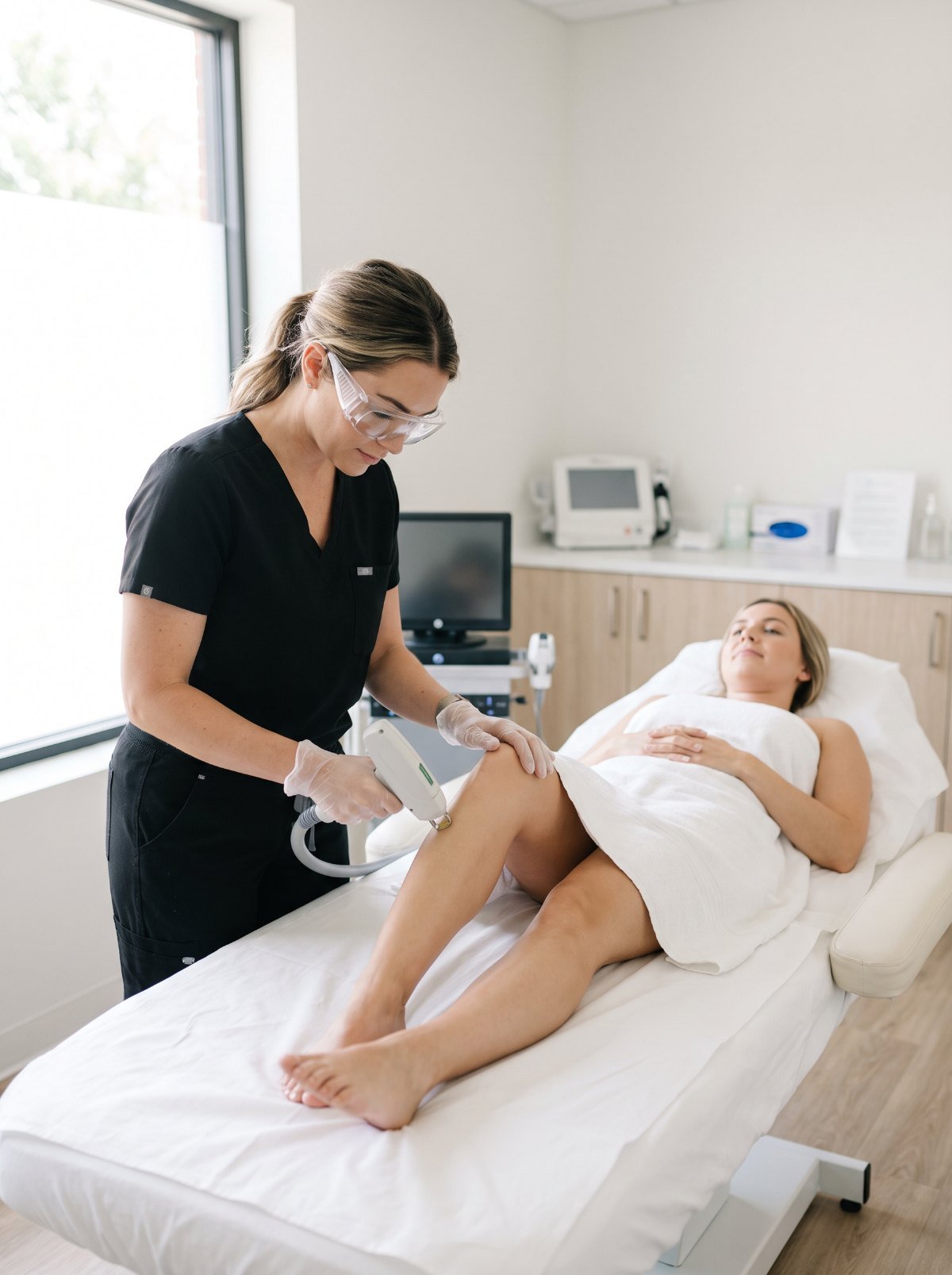
Important: Insurance rules change often and differ between plans, even from the same company. Everything here reflects publicly available policies as of October 2026. Always check your own plan documents and ask your insurer before starting treatment.
United States: Mostly “cosmetic,” with a few exceptions
Most large US insurers publish medical policies that explain when a treatment counts as medically necessary. For hair removal, the typical answer is no.
- Aetna lists “electrolysis or laser hair removal” as a cosmetic procedure in its policy on cosmetic surgery and procedures. Its hirsutism diagnosis codes (ICD-10 L68.0-L68.9) are listed as not covered for the indications in that policy. Electrolysis for gender dysphoria is handled in a separate gender-affirming care policy[2].
- BlueCross BlueShield of Tennessee states that “the removal of hair by means of electrolysis, laser, or any other technique is considered cosmetic”[3].
- Univera Healthcare considers treatment of hirsutism not medically necessary “even if the excessive hair growth is caused by a medical condition.” It does cover one endocrinologist visit to look for an underlying cause[4].
- Kaiser Permanente Mid-Atlantic States covers laser or electrolysis for some specific situations, such as gender-affirming care and certain hair follicle disorders like pseudofolliculitis barbae and hidradenitis suppurativa, but hirsutism is not on its list[5].
There are exceptions. Moda Health has a policy that does cover hair removal for hirsutism, but only when all of these apply[6]:
- The hair is on the face, is dark (black or brown) and causes distress
- A Ferriman-Gallwey score of 8 or more
- At least one year of documented, unsuccessful cosmetic management, such as shaving, waxing or bleaching
- Photos are provided
- A diagnosis of PCOS, NCAH or another endocrine condition, idiopathic hyperandrogenism or idiopathic hirsutism
- One course only: Six treatments, every four weeks
Moda’s policy is a useful example of what a “medically necessary” case looks like on paper, even if your insurer is different. Note that gender-affirming hair removal is often handled under a separate policy, so coverage for it does not mean coverage for hirsutism[2], [5].
Can I use my HSA or FSA?
Probably not, in most cases. Health savings accounts (HSAs) and health flexible spending arrangements (FSAs) can be used for expenses that “would generally qualify for the medical and dental expenses deduction”[7]. IRS Publication 502 lists “hair removal (electrolysis)” among cosmetic procedures you generally cannot include[8]. The exception is cosmetic surgery needed to improve a deformity arising from a congenital abnormality, an injury, or a “disfiguring disease”[8].
Whether hirsutism from a condition like PMOS qualifies as a “disfiguring disease” is not spelled out by the IRS. Some people use a letter of medical necessity from their doctor to support an FSA or HSA claim, but there is no guarantee. Check with your plan administrator and, if needed, a tax professional before you rely on this.
United Kingdom: NHS funding depends on where you live
The NHS website states that laser and electrolysis are “not usually available on the NHS and can be expensive”[9]. In England, decisions are made locally by integrated care boards (ICBs), so the answer depends on your area. Policies differ quite a lot:
- NHS England’s policy for Armed Forces members and their families funds hair removal for “an existing endocrine medical condition and severe facial hirsutism,” among a few other reasons[10].
- West Yorkshire ICB considers facial and neck hair removal on an exceptional basis for women over 18 with a proven endocrine cause, such as PCOS, a score of 10 or more on the Dermatology Life Quality Index (a questionnaire about how much a skin problem affects your life), and medical photography. It funds up to six treatments[11].
- Humber and North Yorkshire funds hair removal for facial hirsutism from a proven endocrine cause when conservative methods have failed, usually after at least six months, with a maximum of six sessions[12].
- Cheshire and Merseyside ICB does not routinely fund laser or electrolysis for hirsutism. Your clinician can still apply for an Individual Funding Request (IFR), but must show your case is exceptional compared with other patients[13].
In practice, your GP or specialist has to apply on your behalf, and in areas without a routine pathway an IFR is usually the only route.
Germany: Statutory insurance rarely pays
In the German statutory health insurance system (GKV), permanent hair removal for hirsutism is usually not covered. Two court decisions show why:
- In 2012, the Lower Saxony-Bremen state social court (LSG Niedersachsen-Bremen) accepted that disfiguring facial hair can justify treatment at the insurer’s expense. But it ruled that laser epilation is a “new method” that the Federal Joint Committee (G-BA) had not approved, and that needle electrolysis was an adequate alternative, even if slow and painful[14].
- In 2020, the Federal Social Court (BSG) ruled in cases about trans women that statutory insurers only have to pay for needle electrolysis performed by a doctor. Electrologists and cosmeticians working on their own are not approved providers, although they can assist in a doctor’s practice[15].
So for women with hirsutism in Germany, the realistic path, if any, is needle electrolysis by a physician, backed by documentation that the hair growth is disfiguring. Private insurers (PKV) have their own terms, so check your contract.
Other countries
We could not find clear, official guidance for Canada or Australia that we could verify. Public plans there generally focus on medical treatment rather than hair removal. Private or extended health plans vary, so ask your insurer directly.
At a glance
| Country | Laser or electrolysis for hirsutism | Main exceptions |
|---|---|---|
| sually cosmetic | Some plans cover facial hirsutism with an endocrine diagnosis and documentation; gender-affirming care often has separate rules | |
| S) | Not usually funded | Some ICBs fund up to six sessions for severe facial hirsutism with an endocrine cause; otherwise IFR |
| y (GKV) | Not usually covered | Court-recognized claims for disfiguring hair, mainly for needle electrolysis by a doctor |
| , Australia | Check your plan | No clear official guidance found |
How to ask for coverage
If you want to try, these steps give you the best chance:
- Get the policy in writing. Ask your insurer or HR department for the clinical policy or medical policy on hair removal and hirsutism. Search the insurer’s website for “hair removal” or “hirsutism” policy.
- Get a clear diagnosis. A documented diagnosis such as PMOS, NCAH or idiopathic hirsutism, with blood test results, matters. Ask your doctor to use the hirsutism code (ICD-10 L68.0) plus the code for the underlying condition. Our guide to hirsutism blood tests lists what is typically checked.
- Record your Ferriman-Gallwey score. Many policies use a threshold, such as 8 or more[6]. See the Ferriman-Gallwey score.
- Document what you have tried. Keep records of shaving, waxing and other methods, and of medications. Medication for hirsutism usually has to be taken for at least six months before you can judge whether it works[16].
- Take photos. Several policies require them[6], [11].
- Ask for a letter of medical necessity. It should explain the diagnosis, the impact on your daily life and mental health, and why other treatments failed.
- Request prior authorization before treatment, not after. Getting reimbursed afterward is much harder.
- Appeal if denied. Ask for the reason in writing, check whether your case meets the policy criteria, and appeal with additional evidence. In the UK, ask your clinician about an IFR.
Before you commit, use our laser vs electrolysis calculator to estimate what treatment could cost you if you pay yourself.
Lower-cost options that are more often covered
Even when hair removal is not covered, the medical treatment of hirsutism usually is. Hormonal birth control pills and anti-androgens like spironolactone are generic and inexpensive in many countries. A prescription cream that slows facial hair growth, eflornithine, is available on prescription in the UK[9], but coverage and availability vary elsewhere. Medication can reduce how much hair removal you need, and combining the two often works better. Read more in our guides to hirsutism medication and permanent hair removal.
FAQ
Why is laser considered cosmetic if my hirsutism is caused by PMOS?
Insurers generally look at the treatment, not the cause. Laser and electrolysis remove hair but do not treat the hormonal condition behind it, so most policies classify them as cosmetic, sometimes explicitly even when a medical condition causes the hair[4].
Does a letter from my doctor guarantee coverage?
No. A letter helps, but your plan’s written policy decides. If the policy excludes hair removal, the letter mainly helps with appeals or exceptions.
Is electrolysis more likely to be covered than laser?
Sometimes. In Germany, courts have pointed to needle electrolysis by a doctor as the treatment statutory insurers can pay for[14], [15]. In the US, many policies treat both the same way[2], [3].
Can I get laser on the NHS for PMOS?
Possibly, if you live in an area that funds it for facial hirsutism with an endocrine cause and you meet the criteria[11], [12]. Otherwise, your clinician can apply for an Individual Funding Request[13].
Key takeaways
- Most insurers in the US, UK and Germany treat laser and electrolysis for hirsutism as cosmetic.
- Exceptions exist, usually for facial hirsutism with a documented endocrine cause, after other treatments have failed, and for a limited number of sessions[6], [11], [12].
- HSA and FSA use for hair removal is generally not allowed unless it treats a deformity from a disfiguring disease, which is a gray area[7], [8].
- Build a strong case: Diagnosis, Ferriman-Gallwey score, photos, records of what you tried and a letter of medical necessity.
- Medical treatments like the pill and spironolactone are usually covered and can reduce the amount of hair removal you need.
- Rules change. This information is current as of October 2026, so always check your own plan.

Free: The Hirsutism Action Plan
A 12-page guide: what’s causing your hair growth, which tests to ask your doctor for, and which treatments actually work, plus a printable doctor visit checklist.
You’ll also get our weekly email. Unsubscribe anytime.
Sources
- myHirsutism. Hirsutism Survey 2019: responses from 269 women with hirsutism, collected January-February 2019. Survey results
- Aetna. Cosmetic Surgery and Procedures. Clinical Policy Bulletin 0031. Last reviewed June 25, 2026. Aetna
- BlueCross BlueShield of Tennessee. Hair Removal. Medical policy, last reviewed February 12, 2026. BCBST
- Univera Healthcare. Treatment of Hirsutism/Hypertrichosis (Hair Removal). Medical Policy 2.01.38, effective December 21, 2023. PDF
- Kaiser Permanente Mid-Atlantic States. Laser Treatment/Electrolysis for Hair Reduction or Removal. Medical policy, approved July 24, 2024. PDF
- Moda Health. Hair removal procedures and treatment of other skin conditions (Hirsutism, Pilonidal Sinus Disease, Folliculitis treatment). Medical necessity criteria, effective May 1, 2025. PDF
- Internal Revenue Service. Publication 969 (2024): Health Savings Accounts and Other Tax-Favored Health Plans. IRS
- Internal Revenue Service. Publication 502 (2025): Medical and Dental Expenses. IRS
- NHS. Excessive hair growth (hirsutism). NHS
- NHS England. Clinical commissioning policy: Aesthetic and plastic and reconstructive procedures, treatments and surgery (Armed Forces health commissioning). NHS England
- West Yorkshire Integrated Care Board. Hair Removal Policy. November 2024. PDF
- Humber and North Yorkshire Health and Care Partnership. Hair removal by intense pulsed light (IPL), laser or electrolysis for hirsutism. Effective October 31, 2024. Policy
- Cheshire and Merseyside Integrated Care Board. Hirsutism, hair removal treatments. Policy CMICB_Clin053, June 2025. PDF
- Landessozialgericht Niedersachsen-Bremen. Kein Anspruch gegen die gesetzliche Krankenversicherung auf eine Laserepilationsbehandlung bei übermäßigem Haarwuchs. Press release 3/13 on judgment of October 17, 2012, L 1 KR 443/11. Press release (German)
- Ärzte Zeitung. Transsexuelle: Kassen müssen nur für Haarentfernung durch Ärzte zahlen. December 21, 2020 (on BSG, B 1 KR 4/20 R). Article (German)
- gesund.bund.de (German Federal Ministry of Health). Hirsutism. April 22, 2022. gesund.bund.de