
Short answer: With PMOS (formerly PCOS), hair removal works, but hormones keep pushing new hairs into growth, so results fade faster than in women without a hormone condition. Laser has the strongest evidence for dark hair and is usually the best starting point for larger areas. Electrolysis is the only permanent option and the only one that works on gray, blond and red hair, which makes it ideal for finishing the face. Combining hair removal with medical treatment that lowers androgens gives the longest-lasting results.
Many women with PMOS spend years cycling through razors, wax and tweezers. When we surveyed 269 women with hirsutism in 2019, most of whom also had PCOS, 96% removed hair regularly, plucking and shaving were the most common methods, and about 9 in 10 struggled with ingrown hairs.[13] Permanent hair removal sounds like the way out, but clinics rarely explain that hormone-driven hair behaves differently. This guide covers what to expect from each method when PMOS is the cause, and how to combine them so you do not pay for the same hairs twice.
Why hair removal is harder with PMOS
In PMOS, higher androgen levels keep turning fine hairs into coarse ones and wake up follicles that were resting.[1], [2] Hair removal can destroy or weaken the follicles that are active today, but it does nothing about the hormonal signal. So new hairs keep appearing, especially on the chin, neck and stomach.
That is why the Endocrine Society guideline supports adding medical treatment, such as the pill, to laser or light-based hair removal in women with hirsutism.[2] Treatment slows the new hair. Hair removal clears what is there.
The methods compared
| Method | How long results last | Best for | What to know with PMOS |
|---|---|---|---|
| Laser | Months to years, with top-ups | Dark hair on light to medium skin. Special lasers for darker skin | Expect more sessions and regular maintenance |
| IPL (salon or home) | Months, with top-ups | Dark hair, smaller budgets | Weaker evidence than laser. Home devices are gentler |
| Electrolysis | Permanent for treated follicles | Any hair color, small areas, finishing the face | Slow. New hormone-driven hairs still need treating |
| Eflornithine cream | Only while you use it | Facial hair | Boosts laser results. Not available everywhere |
| Shaving | 1-3 days | Any area | Safe, painless, does not make hair thicker |
| Waxing, threading, plucking | 2-6 weeks | Small areas, eyebrows | Frequent plucking can cause ingrown hairs and marks |
Laser hair removal with PMOS
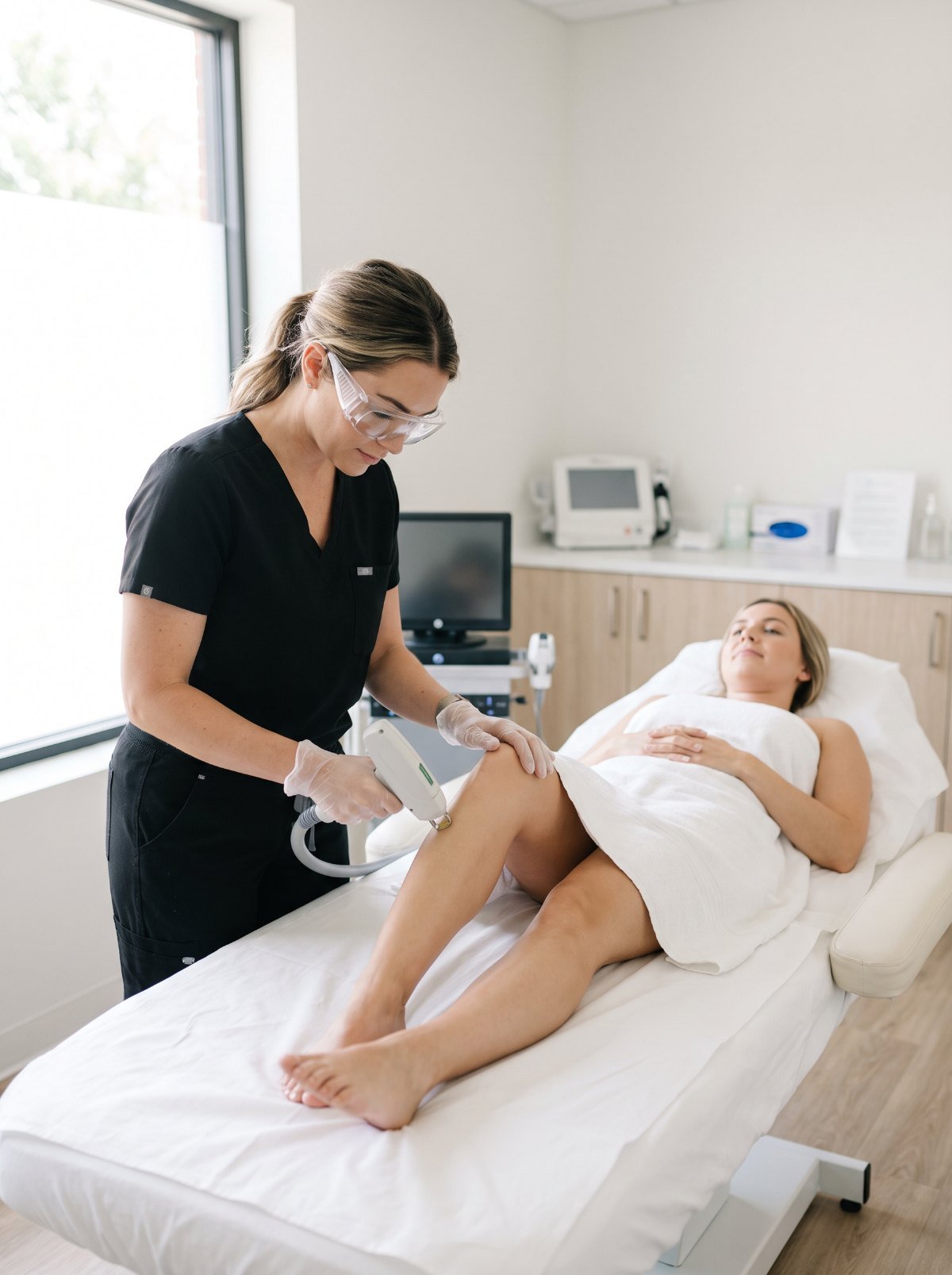
Laser targets the pigment in dark hair and heats the follicle. Reviews of controlled studies show it gives a meaningful, long-lasting reduction in hair, and that results improve with repeated sessions.[3], [4] Most people need several sessions spaced weeks apart, and hormone-driven hair usually needs more, plus top-up sessions once or twice a year or more.
What helps laser work better with PMOS:
- Start medical treatment first or at the same time. Lowering androgens reduces the number of new hairs that appear between sessions.[2]
- Add eflornithine cream for the face, if you can get it. In a randomized study, women who used it alongside laser had better results than with laser alone.[5]
- Choose the right laser for your skin. Long-pulsed Nd:YAG lasers are safer for darker skin. Ask the clinic which device they use and whether they have treated your skin type.
- Budget for maintenance. Plan on top-ups rather than a fixed package that promises “permanent” results.
Laser does not work on gray, white, blond or red hair, because there is no pigment to target. A rare side effect, called paradoxical hypertrichosis, is new hair growth around the treated area. It is most often reported on the face and neck.[6]
Laser can also make a real difference to how women with hirsutism feel. In one study, laser treatment improved quality of life scores in hirsute women.[7]
Electrolysis with PMOS
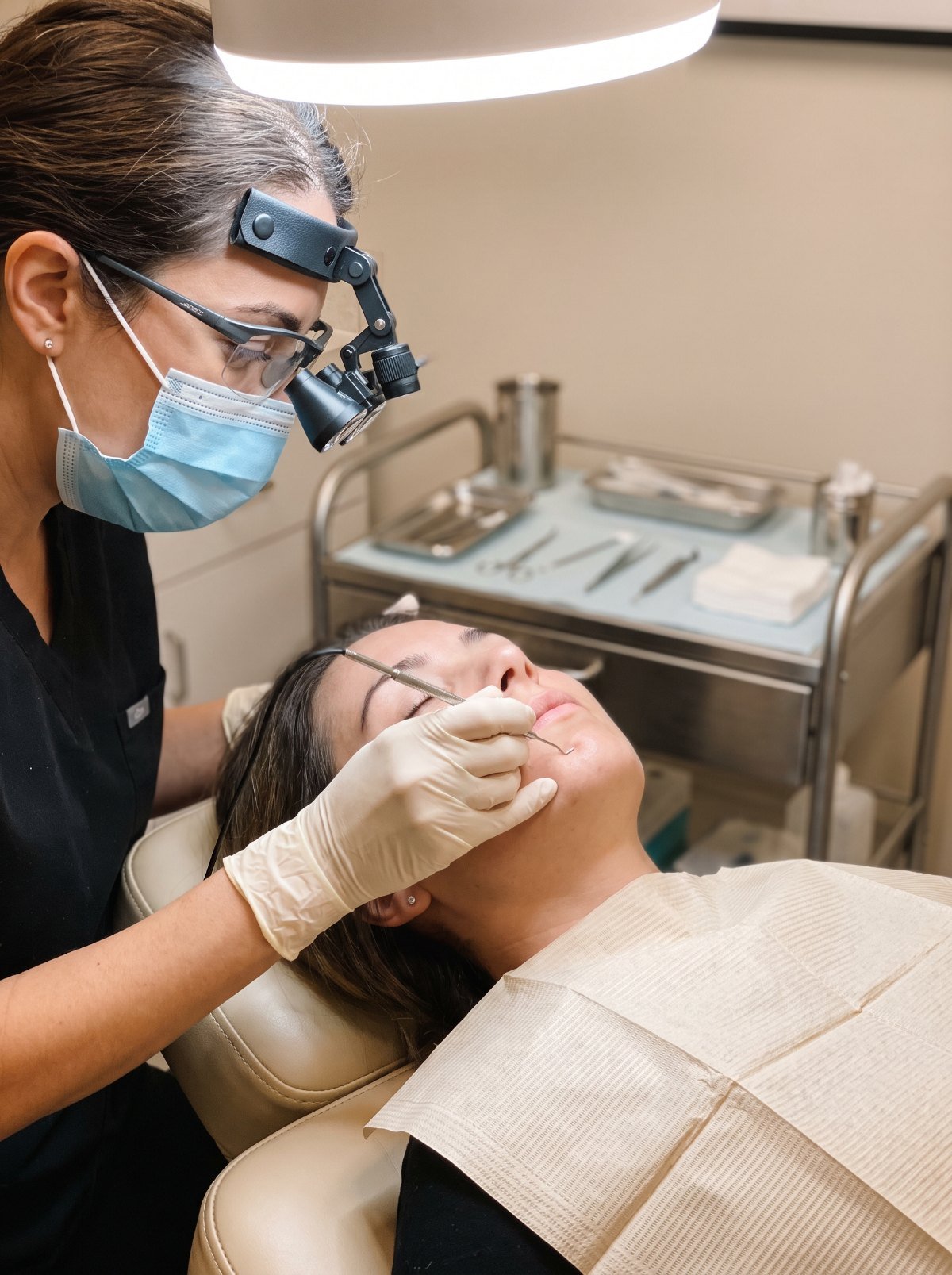
Electrolysis uses a fine probe to destroy each follicle with an electric current. It is the method dermatologists describe as permanent, and it works on every hair color and skin type.[8], [9] A large clinical series from a hirsutism clinic described its long-term use on the face and neck over decades.[10]
The catch is time. Each hair is treated one by one, and sessions usually run weekly or every other week for up to about a year and a half.[8] With PMOS, new hairs keep developing, so you may need occasional sessions after that. Read how long electrolysis takes to show results.
In a small study comparing the two methods on the same women, alexandrite laser was faster and less painful than electrolysis, and gave a larger reduction in hair at six months.[11] That is why many women use laser first for the bulk of dark hair, then electrolysis for the remaining light, gray or stubborn hairs.
Home devices
Home IPL and laser devices are cheaper and private, and they can reduce hair in the short term. The evidence is weaker than for clinic treatments, and the long-term results are less clear.[12] They are a reasonable option for smaller budgets and lighter body areas, as long as your hair is darker than your skin.
What to use where
- Chin, jawline and neck: Laser for dark coarse hair, then electrolysis for what is left. Shave in between, rather than plucking.
- Upper lip: Laser if the hair is dark. Electrolysis for fine or light hair. Eflornithine helps both.
- Stomach, chest and back: Laser or IPL, because electrolysis on large areas takes a very long time.
- A few scattered hairs: Electrolysis, or tweezing if they are rare.
Not sure which is better value for your area? The laser vs electrolysis calculator estimates sessions, time and cost side by side.
Frequently asked questions
Does laser hair removal work for PMOS?
Yes, it reduces dark hair in women with PMOS. Results tend to fade faster than in women without a hormone condition, so most need regular top-up sessions. Combining laser with treatment that lowers androgens helps results last longer.[2], [3]
Is electrolysis better than laser for PMOS?
Neither is better overall. Electrolysis is permanent and works on any hair color, but it is slow and costly for large areas. Laser is faster for dark hair and larger areas. Many women use both.
Will my hair grow back after laser if I have PMOS?
Some will. Treated follicles are weakened or destroyed, but high androgens can activate new follicles over time. Top-up sessions and medical treatment keep the regrowth down.[2]
Should I wait for a diagnosis before starting laser?
It helps. A diagnosis tells you whether hormones are driving the hair, and starting medical treatment first means you pay for fewer sessions. Use our which doctor should I see tool to find the right first appointment.
Key takeaways
- Hormone-driven hair keeps coming back, so hair removal works best alongside medical treatment.
- Laser has the strongest evidence for dark hair and suits larger areas. Plan for top-ups.
- Electrolysis is permanent and works on all hair colors, but it is slow. It is ideal for finishing the face.
- Home devices are a budget option with weaker evidence.
- Shave rather than pluck between sessions, to avoid ingrown hairs and marks.
Read more: PMOS facial hair: why it happens and what helps and permanent hair removal compared.

Free: The Hirsutism Action Plan
A 12-page guide: what’s causing your hair growth, which tests to ask your doctor for, and which treatments actually work, plus a printable doctor visit checklist.
You’ll also get our weekly email. Unsubscribe anytime.
Sources
- Teede HJ, Tay CT, Laven JJE, et al. Recommendations From the 2023 International Evidence-based Guideline for the Assessment and Management of Polycystic Ovary Syndrome. J Clin Endocrinol Metab. 2023;108(10):2447-2469. PubMed 37580314
- Martin KA, Anderson RR, Chang RJ, et al. Evaluation and Treatment of Hirsutism in Premenopausal Women: An Endocrine Society Clinical Practice Guideline. J Clin Endocrinol Metab. 2018;103(4):1233-1257. PubMed 29522147
- Haedersdal M, Gøtzsche PC. Laser and photoepilation for unwanted hair growth. Cochrane Database Syst Rev. 2006;(4):CD004684. Cochrane summary
- Kao YC, Lin DZ, Kang YN, Chang CJ, Chiu WK, Chen C. Efficacy of Laser in Hair Removal: A Network Meta-analysis. J Cosmet Laser Ther. 2023;25(1-4):7-19. doi:10.1080/14764172.2023.2221838
- Hamzavi I, Tan E, Shapiro J, Lui H. A randomized bilateral vehicle-controlled study of eflornithine cream combined with laser treatment versus laser treatment alone for facial hirsutism in women. J Am Acad Dermatol. 2007;57(1):54-59. doi:10.1016/j.jaad.2006.09.025
- Alajlan A, Shapiro J, Rivers JK, MacDonald N, Wiggin J, Lui H. Paradoxical hypertrichosis after laser epilation. J Am Acad Dermatol. 2005;53(1):85-88. doi:10.1016/j.jaad.2004.06.054
- Alizadeh N, Ayyoubi S, Naghipour M, et al. Can laser treatment improve quality of life of hirsute women? Int J Womens Health. 2017;9:777-780. doi:10.2147/IJWH.S137910
- Cleveland Clinic. Electrolysis. Accessed October 2026. Link
- American Academy of Dermatology. 6 ways to remove unwanted hair. Accessed October 2026. Link
- Richards RN, McKenzie MA, Meharg GE. Electroepilation (electrolysis) in hirsutism: 35,000 hours’ experience on the face and neck. J Am Acad Dermatol. 1986;15(4 Pt 1):693-697. doi:10.1016/S0190-9622(86)70225-9
- Görgü M, Aslan G, Aköz T, Erdoğan B. Comparison of alexandrite laser and electrolysis for hair removal. Dermatol Surg. 2000;26(1):37-41. doi:10.1046/j.1524-4725.2000.99104.x
- Thaysen-Petersen D, Bjerring P, Dierickx C, Nash JF, Town G, Haedersdal M. A systematic review of light-based home-use devices for hair removal and considerations on human safety. J Eur Acad Dermatol Venereol. 2012;26(5):545-553. doi:10.1111/j.1468-3083.2011.04353.x
- myHirsutism. Hirsutism Survey 2019: responses from 269 women with hirsutism, collected January-February 2019 (83% also reported PCOS). Unpublished summary.